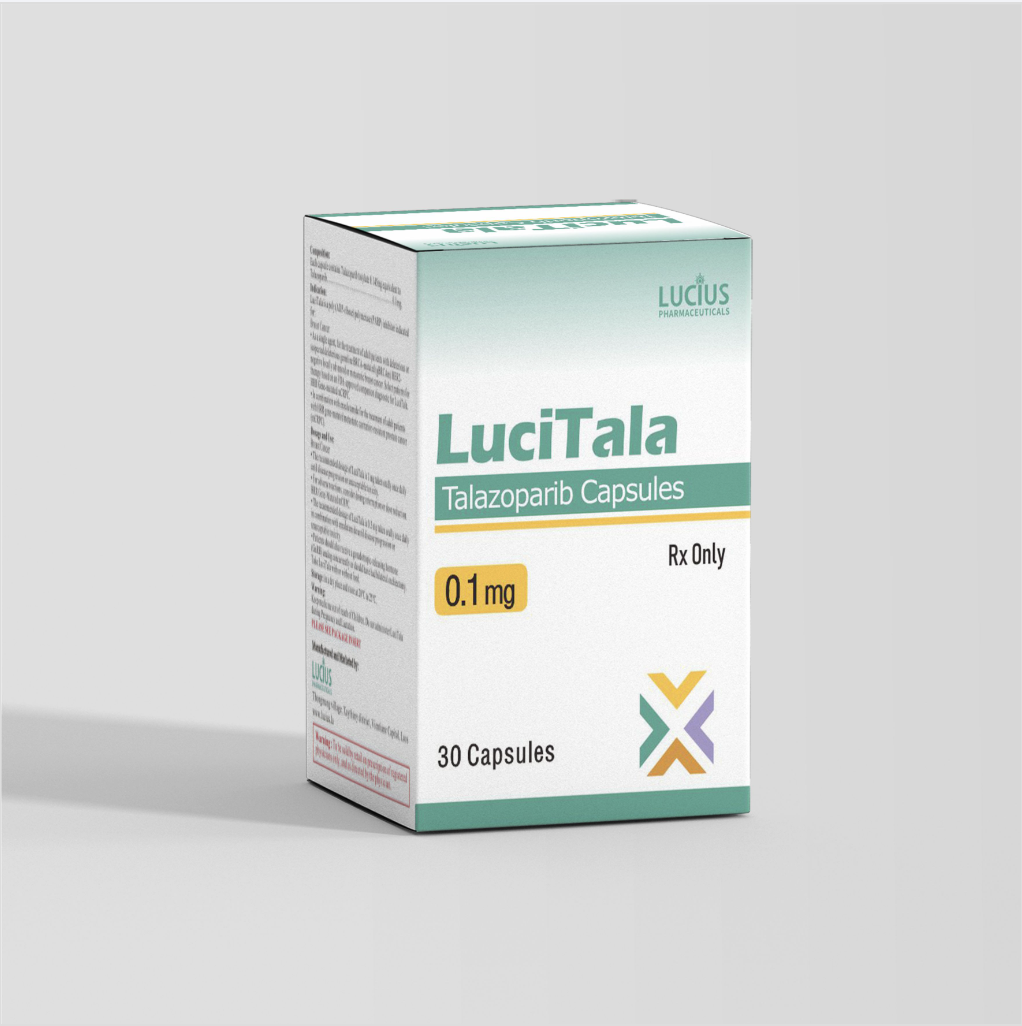
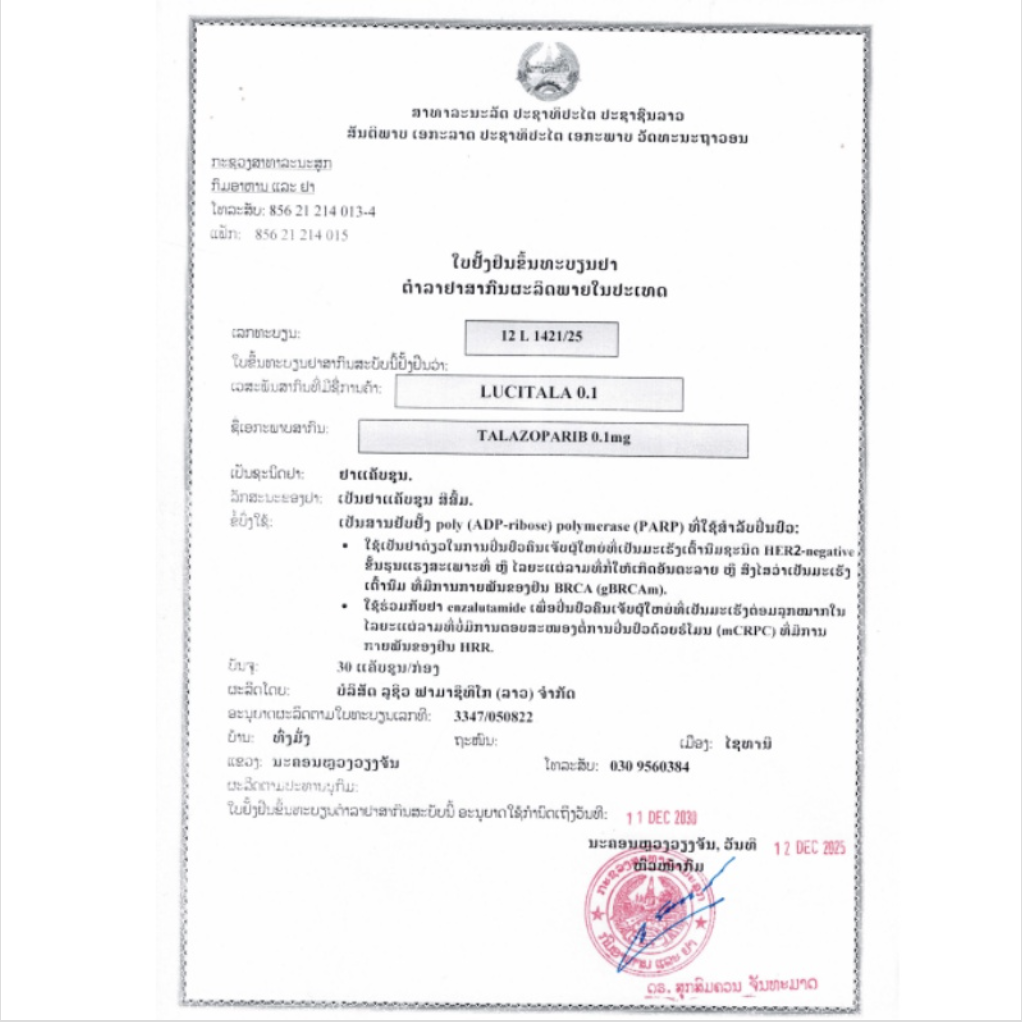

HIGHLIGHTS OF PRESCRIBING INFORMATION
These highlights do not include all the information needed to use LuciTala safely and effectively. See full prescribing information for LuciTala.
INDICATIONS AND USAGE
LuciTala is a poly (ADP-ribose) polymerase (PARP) inhibitor indicated for:
Breast Cancer
• As a single agent, for the treatment of adult patients with deleterious or suspected deleterious germline BRCA-mutated (gBRCAm) HER2-negative locally advanced or metastatic breast cancer. Select patients for therapy based on an FDA-approved companion diagnostic for LuciTala.
HRR Gene-mutated mCRPC.
• In combination with enzalutamide for the treatment of adult patients with HRR gene-mutated metastatic castration-resistant prostate cancer (mCRPC).
DOSAGE AND ADMINISTRATION
• Take LuciTala with or without food.
Breast Cancer
• The recommended dosage of LuciTala is 1 mg taken orally once daily until disease progression or unacceptable toxicity.
• For adverse reactions, consider dosing interruption or dose reduction.
HRR Gene-Mutated mCRPC
• The recommended dosage of LuciTala is 0.5 mg taken orally once daily in combination with enzalutamide until disease progression or unacceptable toxicity.
• Patients should also receive a gonadotropic-releasing hormone (GnRH) analog concurrently or should have had bilateral orchiectomy.
DOSAGE FORMS AND STRENGTHS
Capsules: 0.1mg×30 capsules
CONTRAINDICATIONS
None
WARNINGS AND PRECAUTIONS
• Myelodysplastic Syndrome/Acute Myeloid Leukemia (MDS/AML): MDS/AML occurred in patients exposed to LuciTala, and some cases were fatal. Monitor patients for hematological toxicity and discontinue if MDS/AML is confirmed.
• Myelosuppression: LuciTala may affect hematopoiesis and can cause anemia, neutropenia, and/or thrombocytopenia.
• Embryo-Fetal Toxicity: LuciTala can cause fetal harm. Advise of the potential risk to the fetus and to use effective contraception.
ADVERSE REACTIONS
Most common adverse reactions (≥20%) as a single agent, including laboratory abnormalities, are:
• Hemoglobin decreased, neutrophils decreased, lymphocytes decreased, platelets decreased, fatigue, glucose increased, aspartate aminotransferase increased, alkaline phosphatase increased, alanine aminotransferase increased, calcium decreased, nausea, headache, vomiting, alopecia, diarrhea, and decreased appetite.
Most common adverse reactions (≥10%) in combination with enzalutamide, including laboratory abnormalities, are:
• Hemoglobin decreased, neutrophils decreased, lymphocytes decreased, fatigue, platelets decreased, calcium decreased, nausea, decreased appetite, sodium decreased, phosphate decreased, fractures, magnesium decreased, dizziness, bilirubin increased, potassium decreased, and dysgeusia.
DRUG INTERACTIONS
• P-gp Inhibitors: Reduce the dose when coadministered with certain P-gp inhibitors. Monitor for increased adverse reactions.
• BCRP Inhibitors: Monitor for potential increased adverse reactions.
USE IN SPECIFIC POPULATIONS
• Lactation: Advise women not to breastfeed.
•Renal Impairment: Reduce the dose and monitor for increased adverse reactions for patients with moderate or severe renal impairment.
Storage
Store at 20°C to 25°C (68°F to 77°F), excursions permitted between 15°C and 30°C (59°F and 86°F) [see USP Controlled Room Temperature]. Protect from moisture.