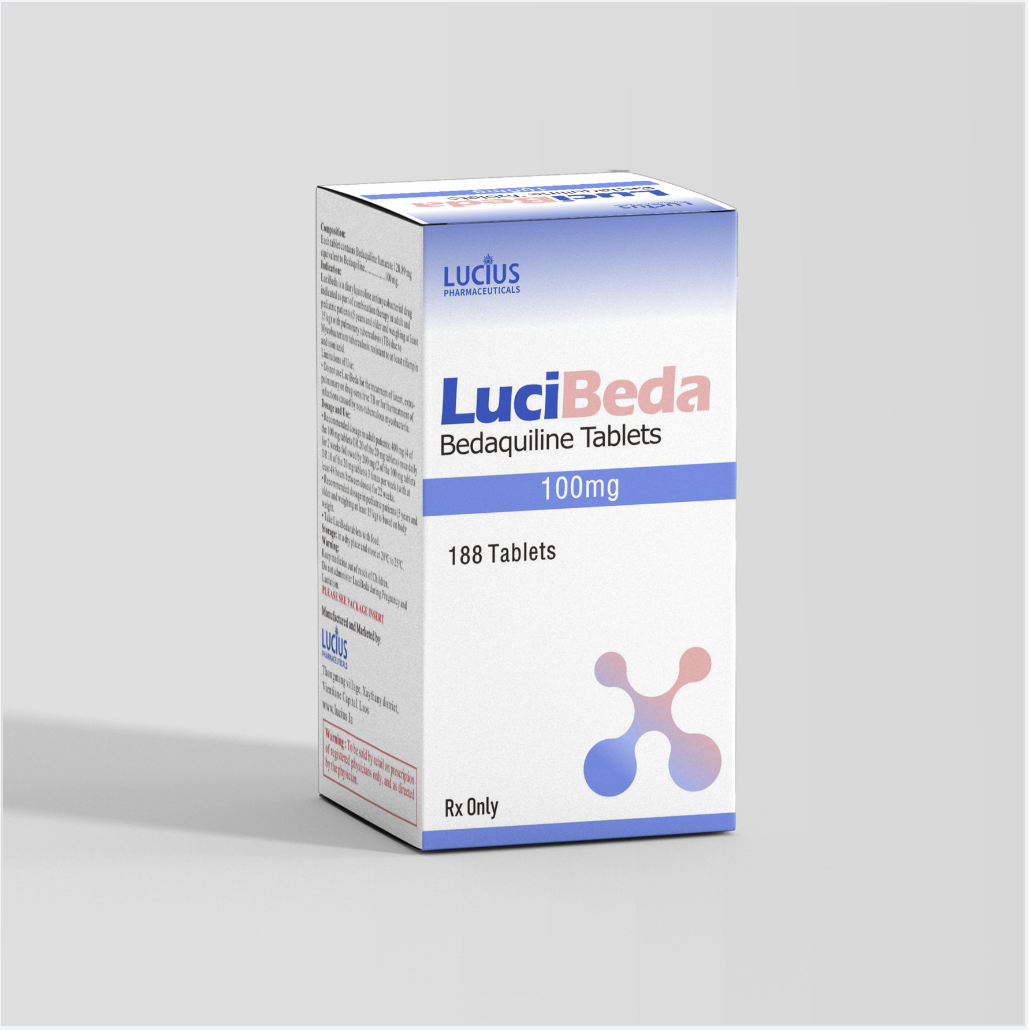
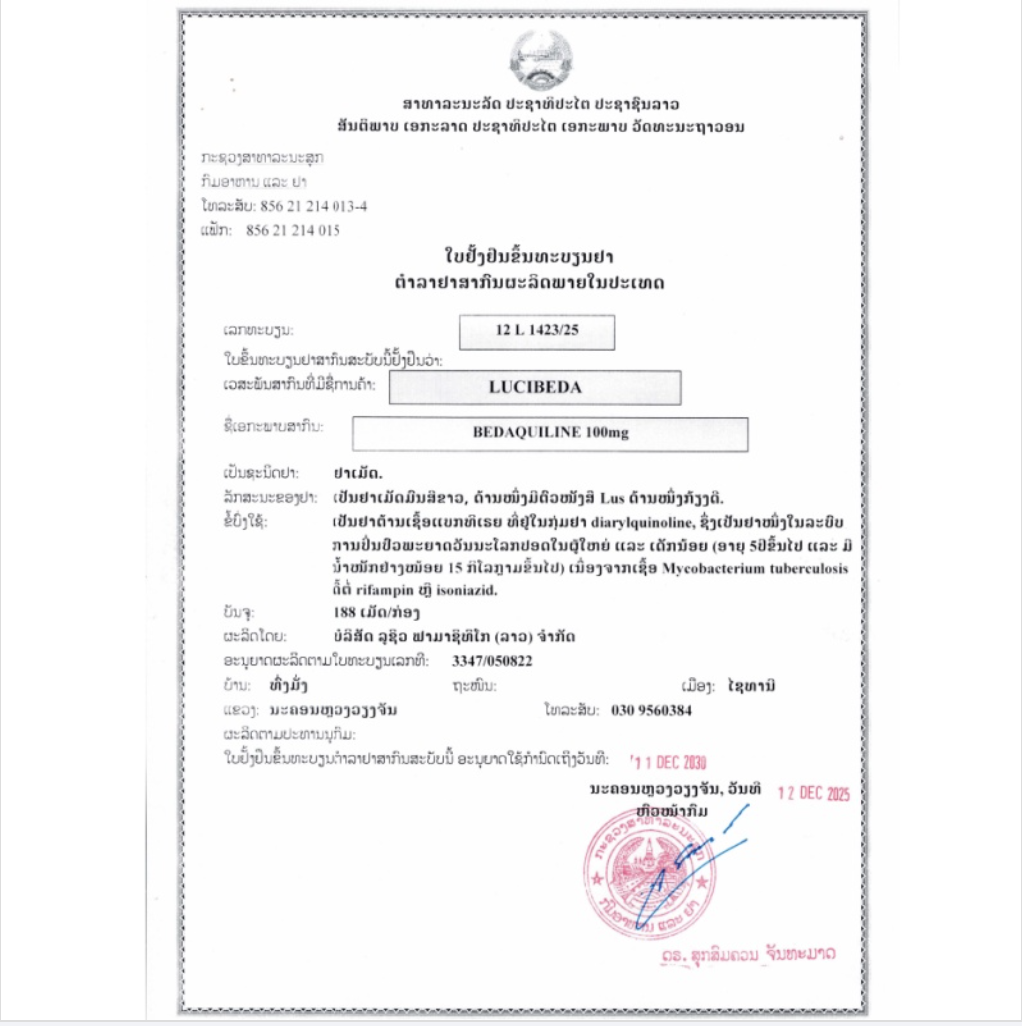

HIGHLIGHTS OF PRESCRIBING INFORMATION
These highlights do not include all the information needed to use LuciBeda safely and effectively. See full prescribing information for LuciBeda.
INDICATIONS AND USAGE
LuciBeda is a diarylquinoline antimycobacterial drug indicated as part of combination therapy in adult and pediatric patients (5 years and older and weighing at least 15 kg) with pulmonary tuberculosis (TB) due to Mycobacterium tuberculosis resistant to at least rifampin and isoniazid.
Limitations of Use:
• Do not use LuciBeda for the treatment of latent, extra-pulmonary or drug-sensitive TB or for the treatment of infections caused by non-tuberculous mycobacteria.
DOSAGE AND ADMINISTRATION
• Administer LuciBeda by directly observed therapy (DOT).
• Emphasize need for compliance with full course of therapy.
• Prior to administration, obtain ECG, liver enzymes and electrolytes. Obtain susceptibility information for the background regimen against Mycobacterium tuberculosis isolate if possible.
• Only use LuciBeda in combination with at least 3 other drugs to which the patient’s TB isolate has been shown to be susceptible in vitro. If in vitro testing results are unavailable, may initiate LuciBeda in combination with at least 4 other drugs to which patient’s TB isolate is likely to be susceptible.
• Recommended dosage in adult patients: 400 mg (4 of the 100 mg tablets) once daily for 2 weeks followed by 200 mg (2 of the 100 mg tablets) 3 times per week (with at least 48 hours between doses) for 22 weeks.
• Recommended dosage in pediatric patients (5 years and older and weighing at least 15 kg) is based on body weight.
• Take LuciBeda tablets with food.
DOSAGE FORMS AND STRENGTHS
Tablets: 100 mg×188 tablets
CONTRAINDICATIONS
None .
WARNINGS AND PRECAUTIONS
• A mortality imbalance was seen in clinical trials in LuciBeda-treated patients with pulmonary TB due to Mycobacterium tuberculosis resistant to at least rifampin.
• Hepatotoxicity may occur with use of LuciBeda. Monitor liver-related laboratory tests. Discontinue LuciBeda if evidence of liver injury occurs.
ADVERSE REACTIONS
• The most common adverse reactions reported in 10% or more adult patients treated with LuciBeda in Study 1 were nausea, arthralgia, headache, hemoptysis and chest pain.
• The most common adverse reactions reported in 10% or more adult patients treated with LuciBeda (40-week arm) in Study 4 were QTc prolongation, nausea, vomiting, arthralgia, transaminases increased, abdominal pain, pruritus, dizziness, headache, chest pain, rash, insomnia, dry skin, and palpitations.
• The most common adverse reactions reported in 10% or more of pediatric patients (12 years to less than 18 years of age) treated with LuciBeda were arthralgia, nausea and abdominal pain.
• The most common adverse reaction reported in 10% or more of pediatric patients (5 years to less than 12 years of age) treated with LuciBeda was elevation in liver enzymes.
DRUG INTERACTIONS
• Avoid use of strong and moderate CYP3A4 inducers with LuciBeda.
• Closely monitor patient safety (e.g., liver function) when LuciBeda is coadministered with CYP3A4 inhibitors.
USE IN SPECIFIC POPULATIONS
• Lactation: Breastfeeding is not recommended unless infant formula is not available. If an infant is exposed to bedaquiline through breast milk, monitor for signs of bedaquiline-related adverse reactions, such as hepatotoxicity.
• Pediatrics: The safety and effectiveness of LuciBeda in pediatric patients less than 5 years of age and/or weighing less than 15 kg have not been established.
• Use with caution in patients with severe hepatic impairment and only when the benefits outweigh the risks. Monitor for LuciBeda-related adverse reactions.
• Use with caution in patients with severe renal impairment.
Storage
Store at 20°C to 25°C (68°F to 77°F), excursions permitted between 15°C and 30°C (59°F and 86°F) [see USP Controlled Room Temperature]. Protect from moisture.