
HIGHLIGHTS OF PRESCRIBING INFORMATION
These highlights do not include all the information needed to use LuciVadadu safely and effectively. See full prescribing information for LuciVadadu.
INDICATIONS AND USAGE
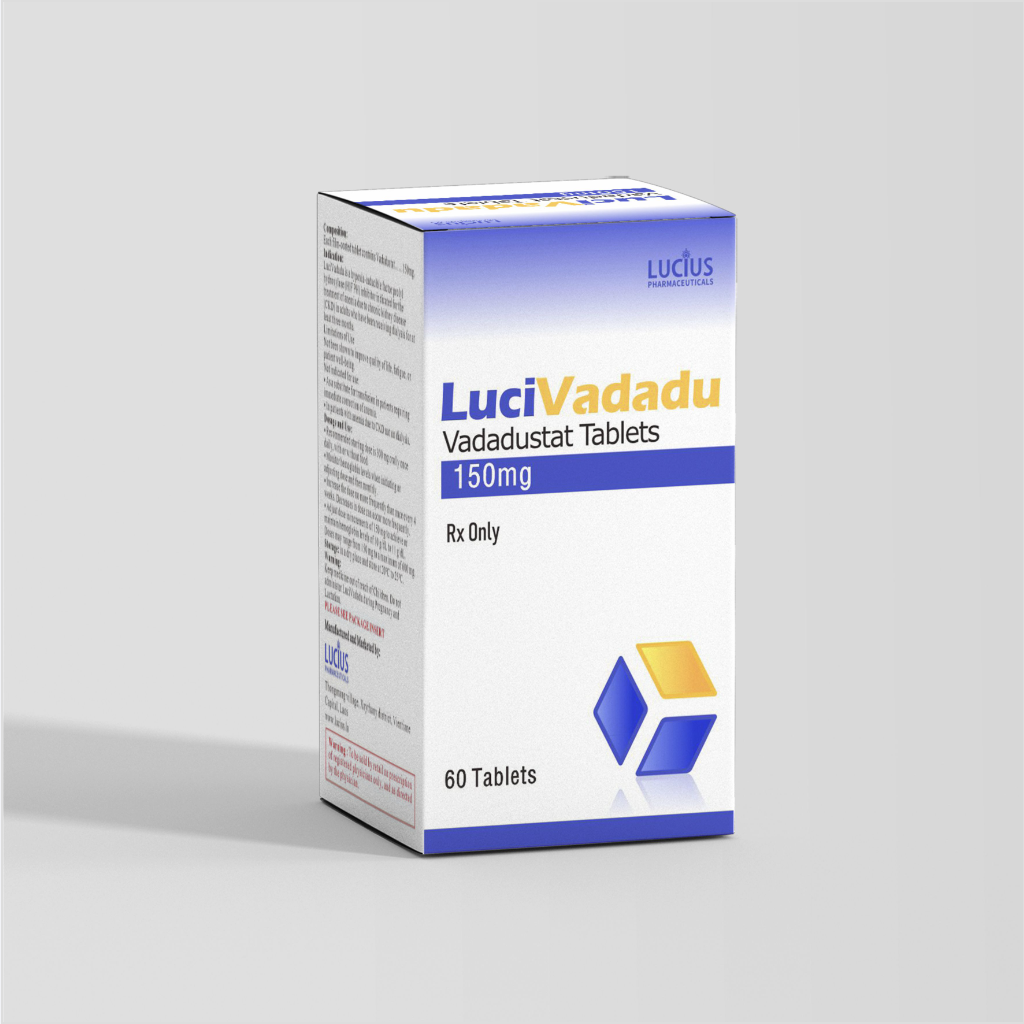
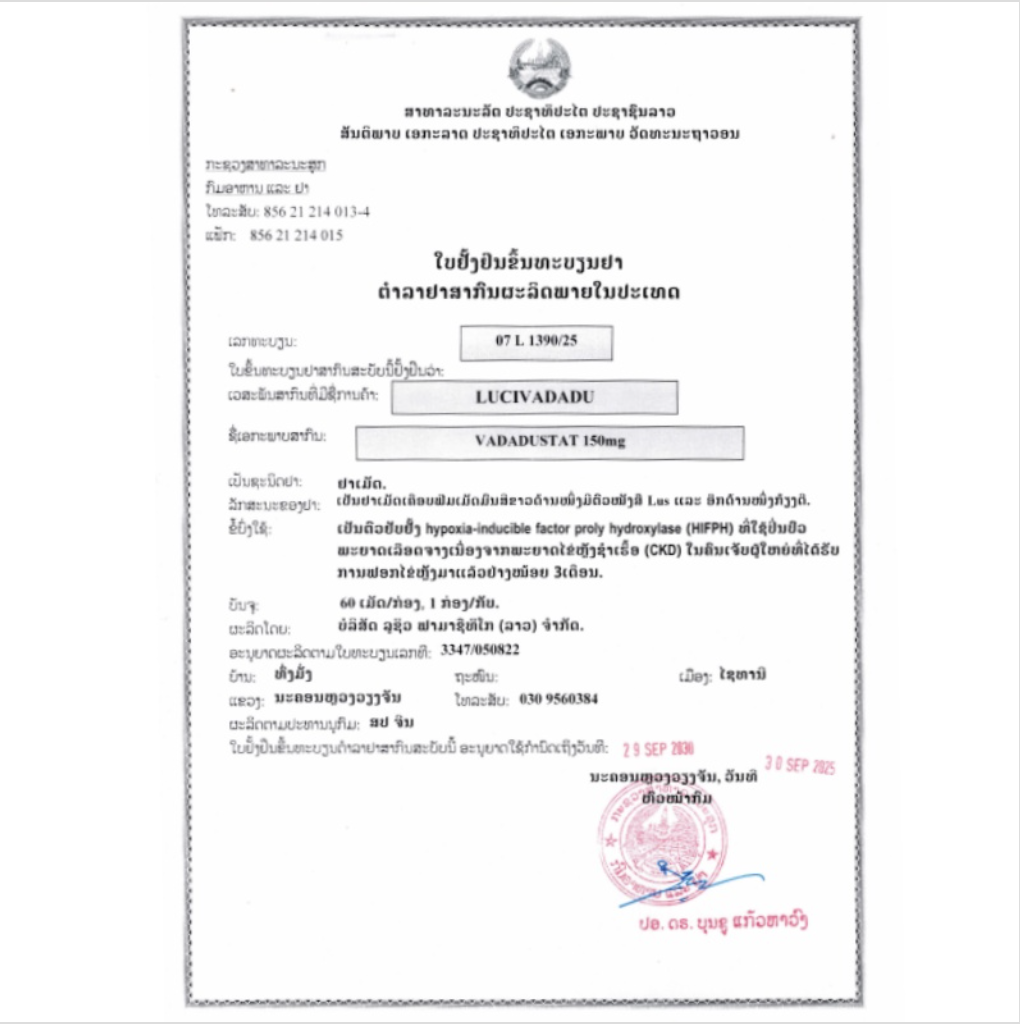
LuciVadadu is a hypoxia-inducible factor prolyl hydroxylase (HIF PH) inhibitor indicated for the treatment of anemia due to chronic kidney disease (CKD) in adults who have been receiving dialysis for at least three months.
Limitations of Use
Not been shown to improve quality of life, fatigue, or patient well-being.
Not indicated for use:
• As a substitute for transfusion in patients requiring immediate correction of anemia.
• In patients with anemia due to CKD not on dialysis.
DOSAGE AND ADMINISTRATION
• Recommended starting dose is 300 mg orally once daily, with or without food.
• Monitor hemoglobin levels when initiating or adjusting dose and then monthly.
• Increase the dose no more frequently than once every 4 weeks. Decreases in dose can occur more frequently.
• Adjust dose in increments of 150 mg to achieve or maintain hemoglobin levels of 10 g/dL to 11 g/dL. Doses may range from 150 mg to a maximum of 600 mg.
DOSAGE FORMS AND STRENGTHS
Tablets: 150 mg×60 tablets
CONTRAINDICATIONS
• Known hypersensitivity to LuciVadadu or any of its components
• Uncontrolled hypertension
WARNINGS AND PRECAUTIONS
• Hepatotoxicity: Has been reported in patients taking LuciVadadu. Measure ALT, AST and bilirubin prior to the initiation of LuciVadadu, monthly after initiation for the first 6 months, then as clinically indicated. Discontinue LuciVadadu if ALT or AST is persistently elevated or accompanied by elevated bilirubin.
• Hypertension: Worsening hypertension, including hypertensive crisis may occur. Monitor blood pressure. Adjust anti-hypertensive therapy as needed.
• Seizures: Seizures have occurred in patients with CKD taking LuciVadadu. Monitor for new-onset seizures, premonitory symptoms, or change in seizure frequency.
• Gastrointestinal Erosion: Gastric or esophageal erosions and gastrointestinal bleeding have been reported.
• Malignancy: May have unfavorable effects on cancer growth. Not recommended if active malignancy.
ADVERSE REACTIONS
The most common adverse reactions (occurring at ≥ 10%) were hypertension and diarrhea.
DRUG INTERACTIONS
• Iron supplements and iron-containing phosphate binders: Administer LuciVadadu at least 1 hour before products containing iron.
• Non-iron-containing phosphate binders: Administer LuciVadadu at least 1 hour before or 2 hours after non-iron-containing phosphate binders.
• BCRP substrates: Monitor for signs of substrate adverse reactions and consider substrate dose reduction.
• Statins: Monitor for statin-related adverse reactions.
USE IN SPECIFIC POPULATIONS
• Pregnancy: May cause fetal harm.
• Lactation: Breastfeeding not recommended until two days after the final dose.
• Hepatic Impairment: Not recommended for use in patients with cirrhosis or active, acute liver disease.
Storage
Store at 20°C to 25°C (68°F to 77°F), excursions permitted between 15°C and 30°C (59°F and 86°F) [see USP Controlled Room Temperature]. Protect from moisture.