
HIGHLIGHTS OF PRESCRIBING INFORMATION
These highlights do not include all the information needed to use LuciNinted safely and effectively. See full prescribing information for LuciNinted.
INDICATIONS AND USAGE
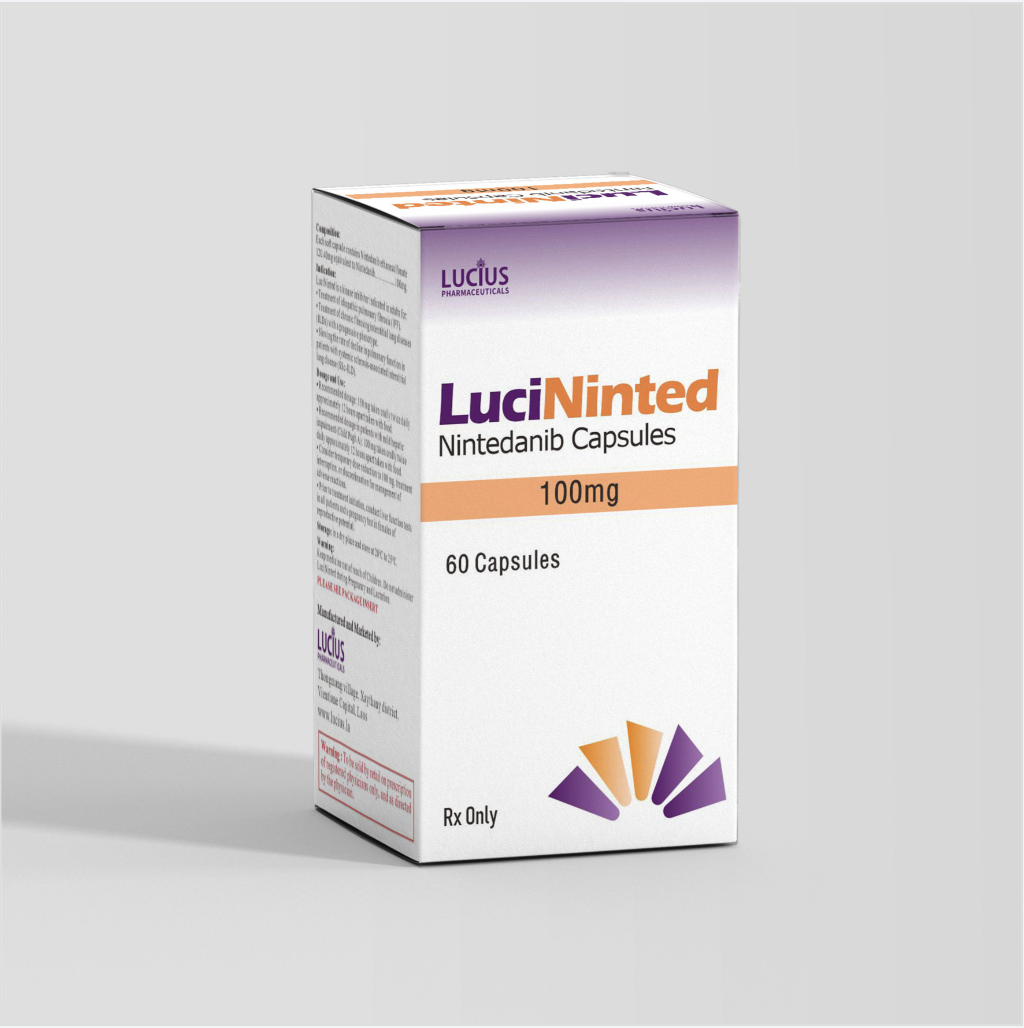
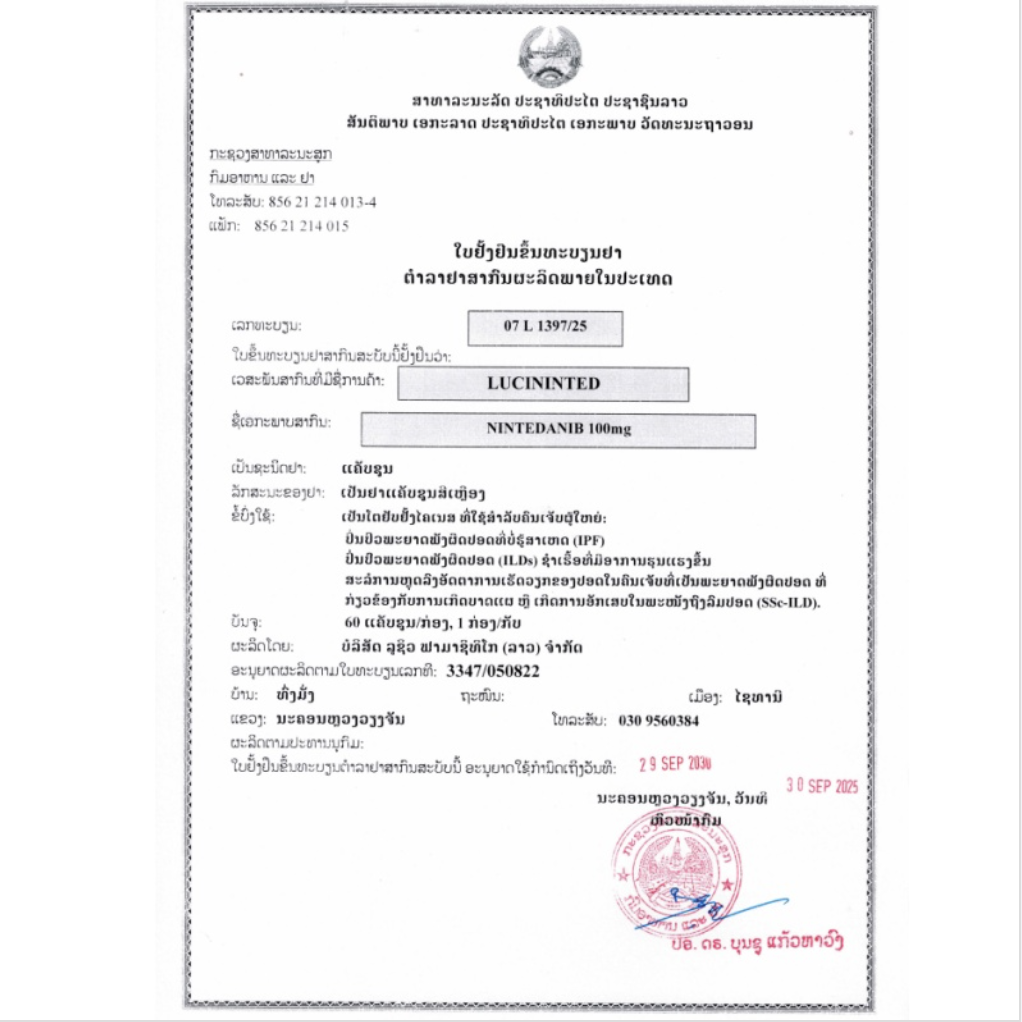
LuciNinted is a kinase inhibitor indicated in adults for:
• Treatment of idiopathic pulmonary fibrosis (IPF).
• Treatment of chronic fibrosing interstitial lung diseases (ILDs) with a progressive phenotype.
• Slowing the rate of decline in pulmonary function in patients with systemic sclerosis-associated interstitial lung disease (SSc-ILD).
DOSAGE AND ADMINISTRATION
• Recommended dosage: 150 mg taken orally twice daily approximately 12 hours apart taken with food.
• Recommended dosage in patients with mild hepatic impairment (Child Pugh A): 100 mg taken orally twice daily approximately 12 hours apart taken with food.
• Consider temporary dose reduction to 100 mg, treatment interruption, or discontinuation for management of adverse reactions.
• Prior to treatment initiation, conduct liver function tests in all patients and a pregnancy test in females of reproductive potential.
DOSAGE FORMS AND STRENGTHS
Soft capsule: 100mg×60 capsule/bottle
CONTRAINDICATIONS
None.
WARNINGS AND PRECAUTIONS
• Hepatic impairment: LuciNinted is not recommended for use in patients with moderate or severe hepatic impairment. In patients with mild hepatic impairment (Child Pugh A), the recommended dosage is 100 mg twice daily approximately 12 hours apart taken with food. Consider treatment interruption, or discontinuation for management of adverse reactions in these patients.
• Elevated liver enzymes and drug-induced liver injury: ALT, AST, and bilirubin elevations have occurred with LuciNinted, including cases of druginduced liver injury. In the postmarketing period, non-serious and serious cases of drug-induced liver injury, including severe liver injury with fatal outcome, have been reported. The majority of hepatic events occur within the first three months of treatment. Liver enzyme and bilirubin increases were reversible with dose modification or interruption in the majority of cases. Monitor ALT, AST, and bilirubin prior to initiation of treatment, at regular intervals during the first three months of treatment, and periodically thereafter or as clinically indicated. Temporary dosage reductions or discontinuations may be required.
• Gastrointestinal disorders: Diarrhea, nausea, and vomiting have occurred with LuciNinted. Treat patients at first signs with adequate hydration and antidiarrheal medicine (e.g., loperamide) or anti-emetics. Discontinue LuciNinted if severe diarrhea, nausea, or vomiting persists despite symptomatic treatment.
• Embryo-Fetal toxicity: Can cause fetal harm. Advise females of reproductive potential of the potential risk to a fetus and to use highly effective contraception. Advise women taking oral hormonal contraceptives experiencing vomiting, diarrhea, or other conditions where the drug absorption may be reduced to use alternative highly effective contraception.
• Arterial thromboembolic events have been reported. Use caution when treating patients at higher cardiovascular risk including known coronary artery disease.
• Bleeding events have been reported. Use LuciNinted in patients with known bleeding risk only if anticipated benefit outweighs the potential risk.
• Gastrointestinal perforation has been reported. Use LuciNinted with caution when treating patients with recent abdominal surgery, previous history of diverticular disease or receiving concomitant corticosteroids or NSAIDs. Discontinue LuciNinted in patients who develop gastrointestinal perforation. Only use LuciNinted in patients with known risk of gastrointestinal perforation if the anticipated benefit outweighs the potential risk.
• Nephrotic range proteinuria has been reported. Consider treatment interruption in patients who develop new or worsening proteinuria.
ADVERSE REACTIONS
Most common adverse reactions (≥5%) are: diarrhea, nausea, abdominal pain, vomiting, liver enzyme elevation, decreased appetite, headache, weight decreased, and hypertension.
DRUG INTERACTIONS
• Coadministration of P-gp and CYP3A4 inhibitors may increase nintedanib exposure. Monitor patients closely for tolerability of LuciNinted.
USE IN SPECIFIC POPULATIONS
• Lactation: Breastfeeding is not recommended.
• Renal impairment: The safety and efficacy of LuciNinted have not been studied in patients with severe renal impairment and end-stage renal disease.
• Smokers: Decreased exposure has been noted in smokers which may alter the efficacy profile of LuciNinted.
Storage
Store at 20°C to 25°C (68°F to 77°F), excursions permitted between 15°C and 30°C (59°F and 86°F) [see USP Controlled Room Temperature]. Protect from moisture.