
HIGHLIGHTS OF PRESCRIBING INFORMATION
These highlights do not include all the information needed to use LuciBriga safely and effectively. See full prescribing information for LuciBriga.
INDICATIONS AND USAGE
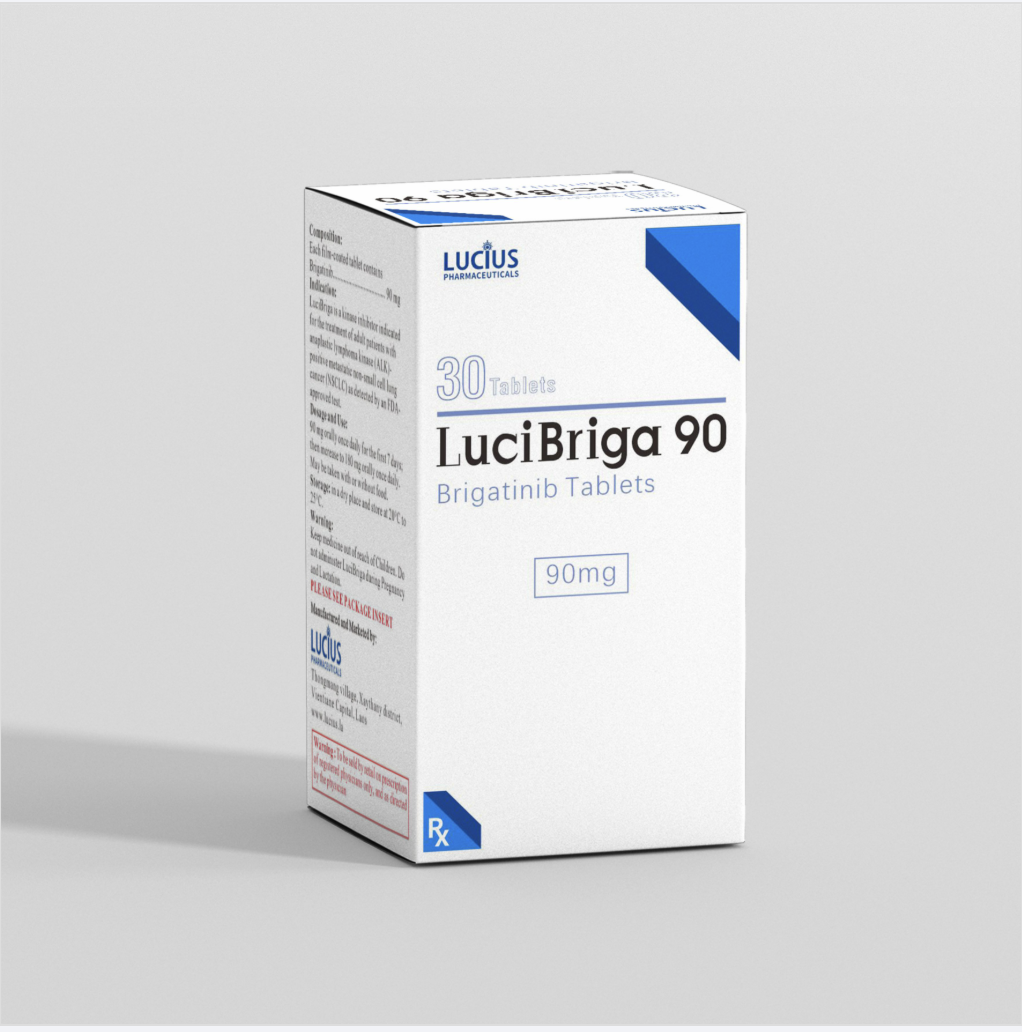
LuciBriga is a kinase inhibitor indicated for the treatment of adult patients with anaplastic lymphoma kinase (ALK)-positive metastatic non-small cell lung cancer (NSCLC) as detected by an FDA-approved test.
DOSAGE AND ADMINISTRATION
90 mg orally once daily for the first 7 days; then increase to 180 mg orally once daily. May be taken with or without food.
DOSAGE FORMS AND STRENGTHS
Tablets: 90 mg×30 tablets
CONTRAINDICATIONS
None.
WARNINGS AND PRECAUTIONS
· Interstitial Lung Disease (ILD)/Pneumonitis: Monitor for new or worsening respiratory symptoms, particularly during the first week of treatment. Withhold LuciBriga for new or worsening respiratory symptoms and promptly evaluate for ILD/pneumonitis. Upon recovery, either dose reduce or permanently discontinue LuciBriga.
· Hypertension: Monitor blood pressure after 2 weeks and then at least monthly during treatment. For severe hypertension, withhold LuciBriga, then dose reduce or permanently discontinue.
· Bradycardia: Monitor heart rate and blood pressure regularly during treatment. If symptomatic, withhold LuciBriga, then dose reduce or permanently discontinue.
· Visual Disturbance: Advise patients to report visual symptoms. Withhold LuciBriga and obtain ophthalmologic evaluation, then dose reduce or permanently discontinue LuciBriga.
· Creatine Phosphokinase (CPK) Elevation: Monitor CPK levels regularly during treatment. Based on the severity and with muscle pain or weakness, withhold LuciBriga, then resume or reduce dose.
· Pancreatic Enzymes Elevation: Monitor lipase and amylase levels regularly during treatment. Based on the severity, withhold LuciBriga, then resume or reduce dose.
· Hepatotoxicity: Monitor alanine aminotransferase (ALT), aspartate aminotransferase (AST) and total bilirubin levels regularly during treatment. Based on severity, withhold dose, then resume at lower level.
· Hyperglycemia: Assess fasting serum glucose prior to starting LuciBriga and regularly during treatment. If not adequately controlled with optimal medical management, withhold LuciBriga, then consider dose reduction or permanently discontinue, based on severity.
· Photosensitivity: Advise patients to limit sun exposure. Based on severity withhold LuciBriga, then resume at the same dose, reduce the dose, or permanently discontinue.
· Embryo-Fetal Toxicity: Can cause fetal harm. Advise females of reproductive potential of the potential risk to a fetus and to use effective contraception.
ADVERSE REACTIONS
The most common adverse reactions (≥25%) with LuciBriga were diarrhea, fatigue, nausea, rash, cough, myalgia, headache, hypertension, vomiting, and dyspnea.
DRUG INTERACTIONS
· CYP3A Inhibitors: Avoid coadministration of LuciBriga with strong or moderate CYP3A inhibitors. If coadministration of a strong or moderate CYP3A inhibitor is unavoidable, reduce the dose of LuciBriga.
· CYP3A Inducers: Avoid coadministration of LuciBriga with strong or moderate CYP3A inducers. If coadministration of a moderate CYP3A inducer is unavoidable, increase the dose of LuciBriga.
USE IN SPECIFIC POPULATIONS
· Hepatic Impairment: Reduce the dose of LuciBriga for patients with severe hepatic impairment.
· Renal Impairment: Reduce the dose of LuciBriga for patients with severe renal impairment.
· Lactation: Advise not to breastfeed.
Storage
Store at 20℃ to 25℃ (68℉ to 77℉), excursions permitted between 15℃ and 30℃ (59℉ and 86℉) [see USP Controlled Room Temperature]. Protect from moisture.