
HIGHLIGHTS OF PRESCRIBING INFORMATION
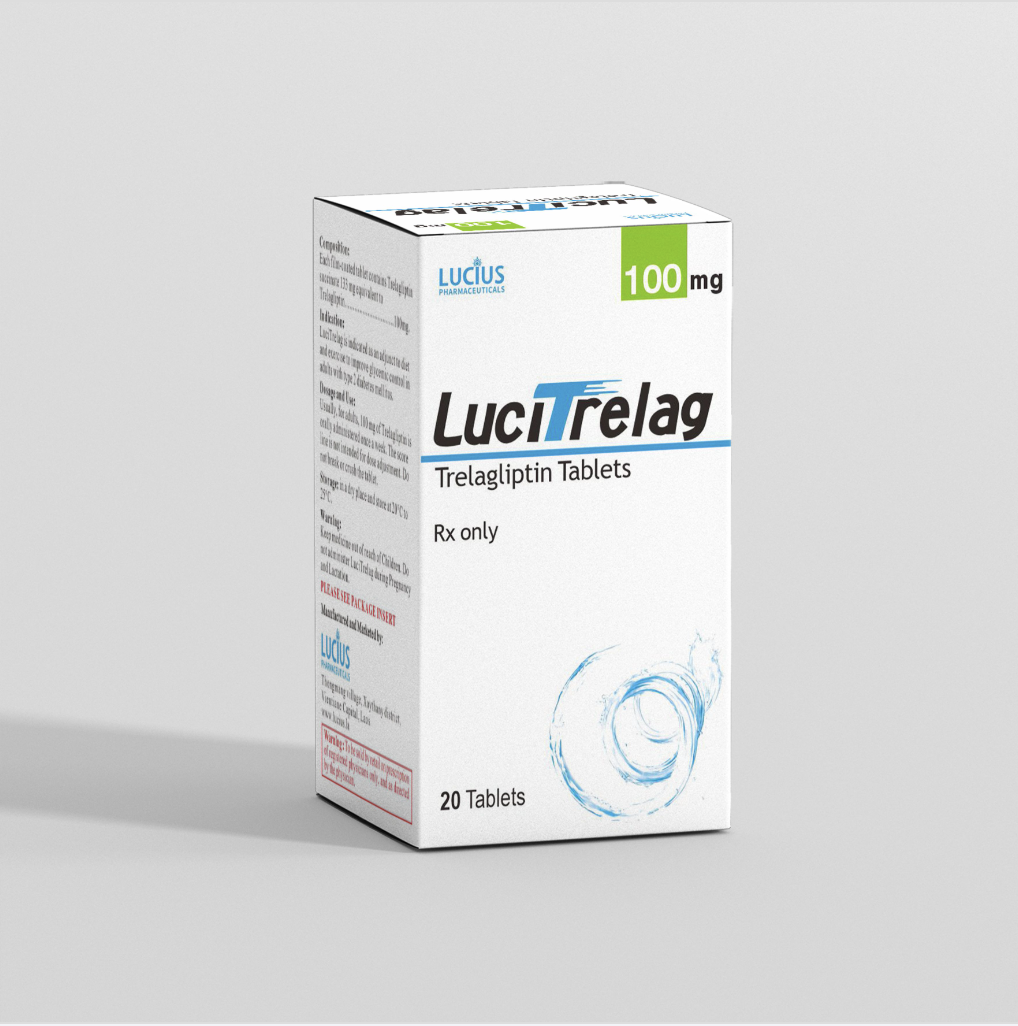
These highlights do not include all the information needed to use LuciTrelag safely and effectively. See full prescribing information for LuciTrelag.
INDICATIONS AND USAGE
LuciTrelag is indicated as an adjunct to diet and exercise to improve glycemic control in adults with type 2 diabetes mellitus.
DOSAGE AND ADMINISTRATION
Usually, for adults, 100 mg of trelagliptin is orally administered once a week. The score line is not intended for dose adjustment. Do not break or crush the tablet.
DOSAGE FORMS AND STRENGTHS
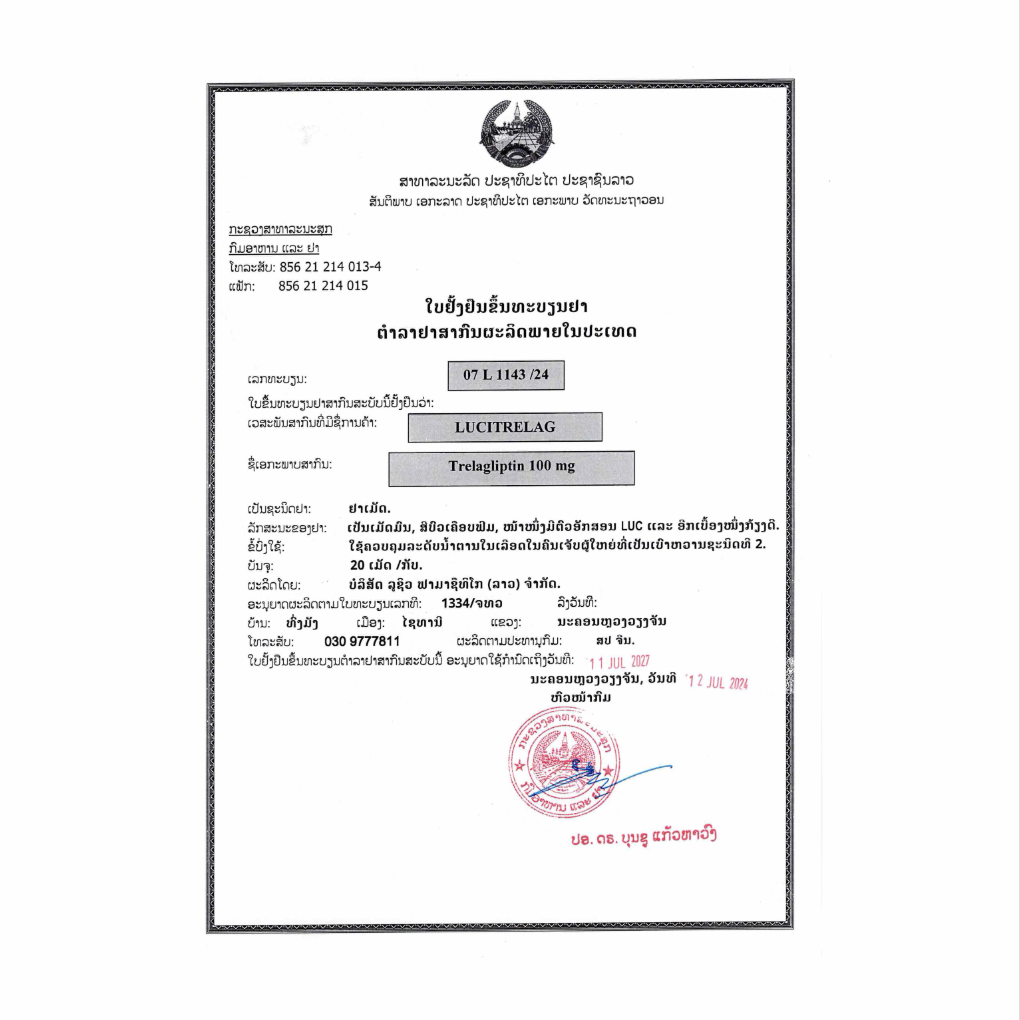
Tablets: 100 mg×20 tablets
CONTRAINDICATIONS
Hypersensitivity to trelagliptin or any of its components.
Patients with severe renal impairment or end-stage renal failure on dialysis.
WARNINGS AND PRECAUTIONS
Hypoglycemia
The risk of hypoglycemia may increase with concomitant use of trelagliptin and sulfonylureas or insulin preparations. Therefore, reduction of the dosage of sulfonylureas or insulin preparations should be considered to reduce the risk of hypoglycemia when used in combination with trelagliptin.
Acute Pancreatitis
Postmarketing events of acute pancreatitis have been reported for trelagliptin and have been associated with other DPP-4 inhibitors. After initiation of trelagliptin, patients should be observed carefully for signs and symptoms of pancreatitis. If pancreatitis is suspected, trelagliptin should be promptly discontinued and appropriate management should be initiated.
ADVERSE REACTIONS
Table 1. Adverse drug reactions with trelagliptin in clinical studies
|
|
≥ 0.1% to < 5% |
|
Hypersensitivity |
Rash Pruritus |
|
Cardiovascular |
Atrial fibrillation |
|
Hepatic |
ALT increased AST increased γ-GTP increased |
|
Others |
Lipase increased Amylase increased CPK increased Urinary occult blood positive Nasopharyngitis |

DRUG INTERACTIONS
No clinically meaningful interactions (with both drug and food) were observed, and no need for
dose adjustment of trelagliptin or other concomitantly administered drugs was identified.
Trelagliptin is primarily renally excreted. Cytochrome (CYP) P450-related metabolism is
negligible. No significant drug-drug interactions were observed with the CYP-substrates tested.
Effects of other medicinal products on trelagliptin
Results from clinical interaction studies demonstrate that there are no clinically relevant effects of
glimepiride or metformin on the pharmacokinetics of trelagliptin.
Effects of trelagliptin on other medical products
In vitro studies suggest that trelagliptin does not inhibit nor induce CYP 450 isoforms at
concentrations achieved with the recommended dose of 100 mg trelagliptin (see section 5.2).
Trelagliptin is a substrate of P-glycoprotein and in vitro studies showed slight inhibition of transport
of digoxin through P-glycoprotein (IC50 value : 500 µmol/L or higher) or showed inhibition of
uptake of metformin, an organic cationic transporter-2 (OCT2) substrate (IC50 value : 55.9
µmol/L).
In clinical studies, trelagliptin had no clinically relevant effect on the pharmacokinetics of caffeine,
tolbutamide, dextromethorphan, midazolam, metformin, or glimepiride, thus providing in vivo
evidence of a low propensity to cause interaction with substrates of CYP1A2, CYP2C9, CYP2D6,
CYP3A4 or OCT2.
USE IN SPECIFIC POPULATIONS
Pregnancy
Trelagliptin should not be administered to women who are or may be pregnant, unless the
expected therapeutic benefit is thought to outweigh any possible risk to the mother and the fetus.
Lactation
During the treatment with trelagliptin, nursing should be avoided if the administration of this
drug is necessary for the mother.
Storage
Store at 20℃ to 25℃ (68℉ to 77℉), excursions permitted between 15℃ and 30℃ (59℉ and 86℉) [see USP Controlled Room Temperature]. Protect from moisture.