
HIGHLIGHTS OF PRESCRIBING INFORMATION
These highlights do not include all the information needed to use LuciBru safely and effectively. See full prescribing information for LuciAfa.
INDICATIONS AND USAGE
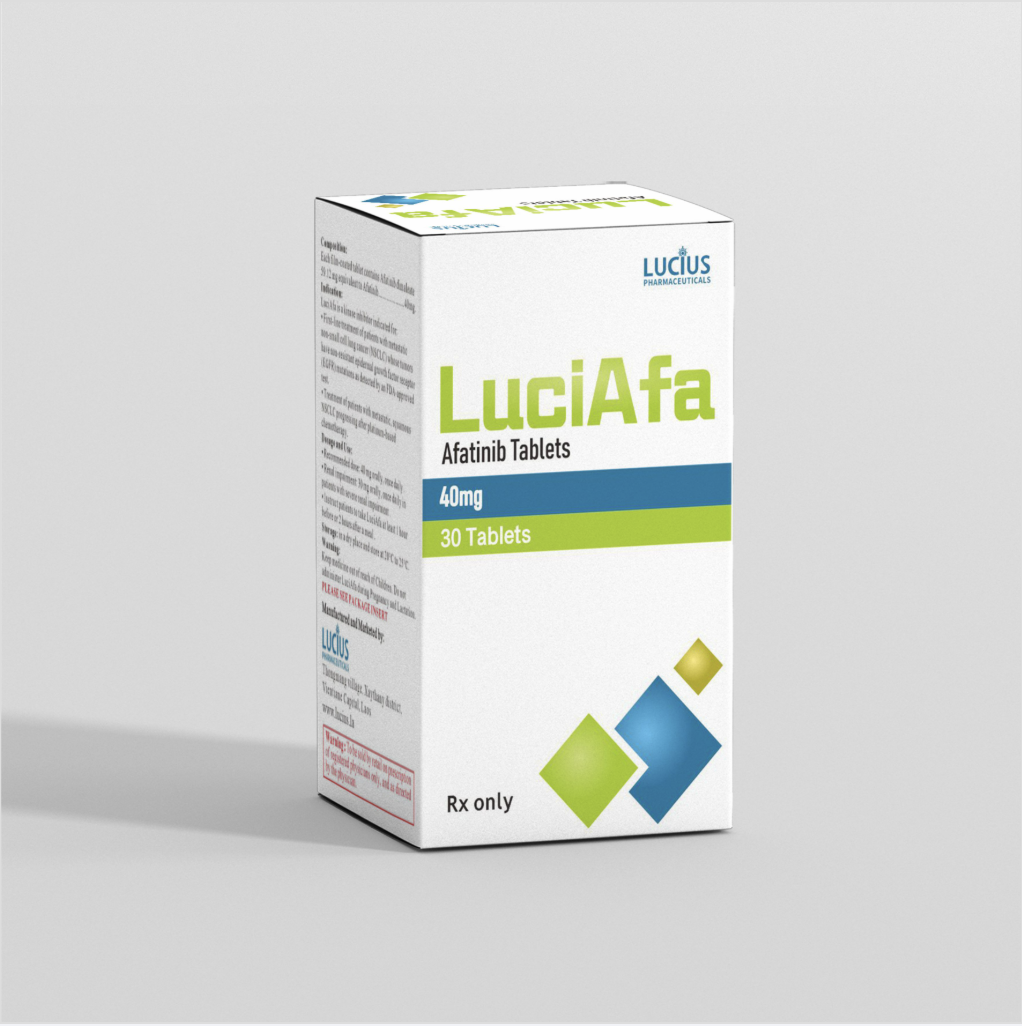
LuciAfa is a kinase inhibitor indicated for:
• First-line treatment of patients with metastatic non-small cell lung cancer (NSCLC) whose tumors have non-resistant epidermal growth factor receptor (EGFR) mutations as detected by an FDA-approved test.
Limitations of Use: Safety and efficacy of LuciAfa were not established in patients whose tumors have resistant EGFR mutations .
• Treatment of patients with metastatic, squamous NSCLC progressing after platinum-based chemotherapy .
DOSAGE AND ADMINISTRATION
• Recommended dosage: 40 mg orally once daily.
• Renal impairment: 30 mg orally once daily in patients with severe renal impairment.
• Instruct patients to take LuciAfa at least 1 hour before or 2 hours after a meal.
DOSAGE FORMS AND STRENGTHS
Tablets: 40 mg×30 tablets
CONTRAINDICATIONS
None. (4)
WARNINGS AND PRECAUTIONS
• Diarrhea: Diarrhea may result in dehydration and renal failure. Withhold LuciAfa for severe and prolonged diarrhea not responsive to antidiarrheal agents.
• Bullous and exfoliative skin disorders: Severe bullous, blistering, and exfoliating lesions occurred in 0.2% of patients. Discontinue for lifethreatening cutaneous reactions. Withhold LuciAfa for severe and prolonged cutaneous reactions.
• Interstitial lung disease (ILD): Occurs in 1.6% of patients. Withhold LuciAfa for acute onset or worsening of pulmonary symptoms. Discontinue LuciAfa if ILD is diagnosed.
• Hepatic toxicity: Fatal hepatic impairment occurs in 0.2% of patients. Monitor with periodic liver testing. Withhold or discontinue LuciAfa for severe or worsening liver tests.
• Gastrointestinal perforation: Occurs in 0.2% of patients. Permanently discontinue LuciAfa in patients who develop gastrointestinal perforation.
• Keratitis: Occurs in 0.7% of patients. Withhold LuciAfa for keratitis evaluation. Withhold or discontinue LuciAfa for confirmed ulcerative keratitis.
• Embryo-fetal toxicity: Can cause fetal harm when administered to a pregnant woman. Advise pregnant women and females of reproductive potential of the potential risk to the fetus and to use effective contraception.
ADVERSE REACTIONS
Most common adverse reactions (≥20%) were diarrhea, rash/acneiform dermatitis, stomatitis, paronychia, dry skin, decreased appetite, nausea, vomiting, pruritus.
DRUG INTERACTIONS
• P-glycoprotein (P-gp) Inhibitors: Co-administration of P-gp inhibitors can increase afatinib exposure. Reduce LuciAfa by 10 mg per day if not tolerated.
• P-gp Inducers: Co-administration of chronic P-gp inducers orally can decrease afatinib exposure. Increase LuciAfa by 10 mg per day as tolerated.
USE IN SPECIFIC POPULATIONS
• Lactation: Advise not to breastfeed.
Storage
Store at 20°C to 25°C (68°F to 77°F), excursions permitted between 15°C and 30°C (59°F and 86°F) [see USP Controlled Room Temperature]. Protect from moisture.