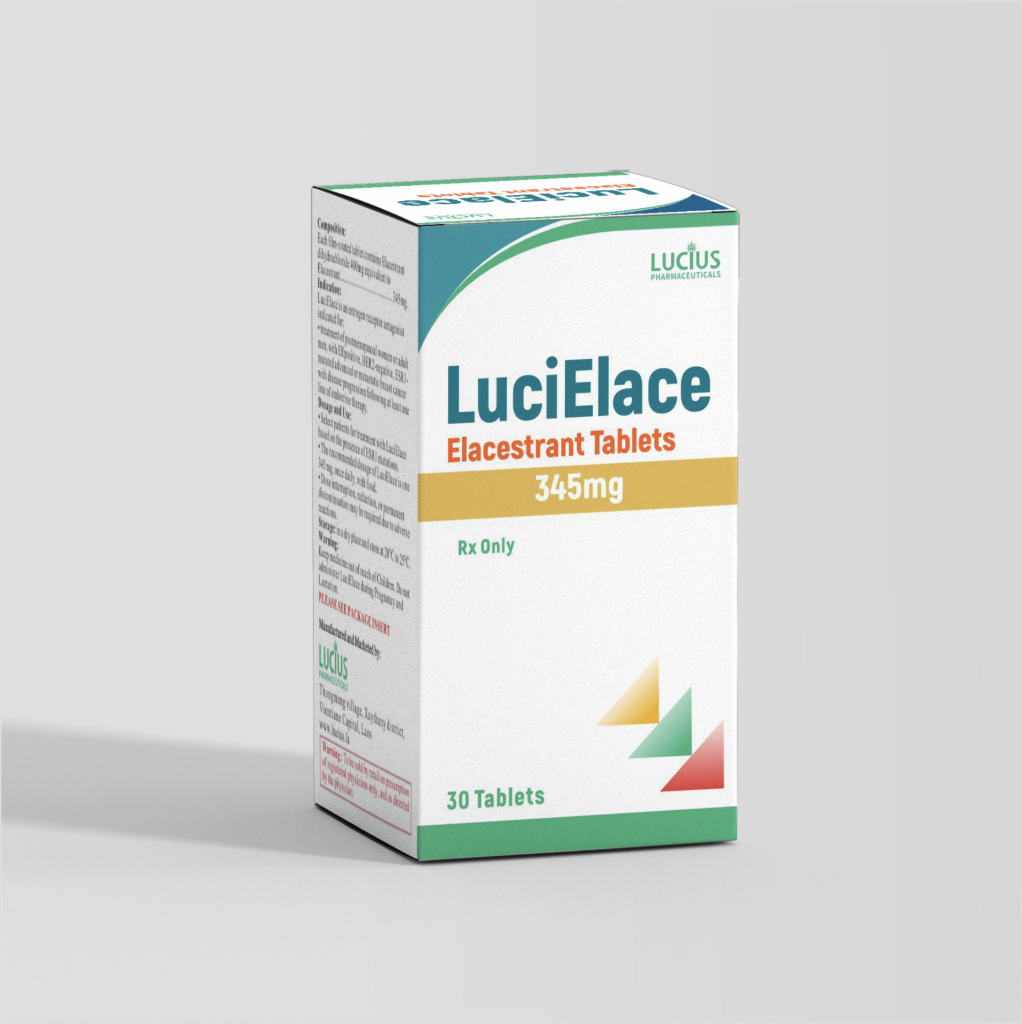
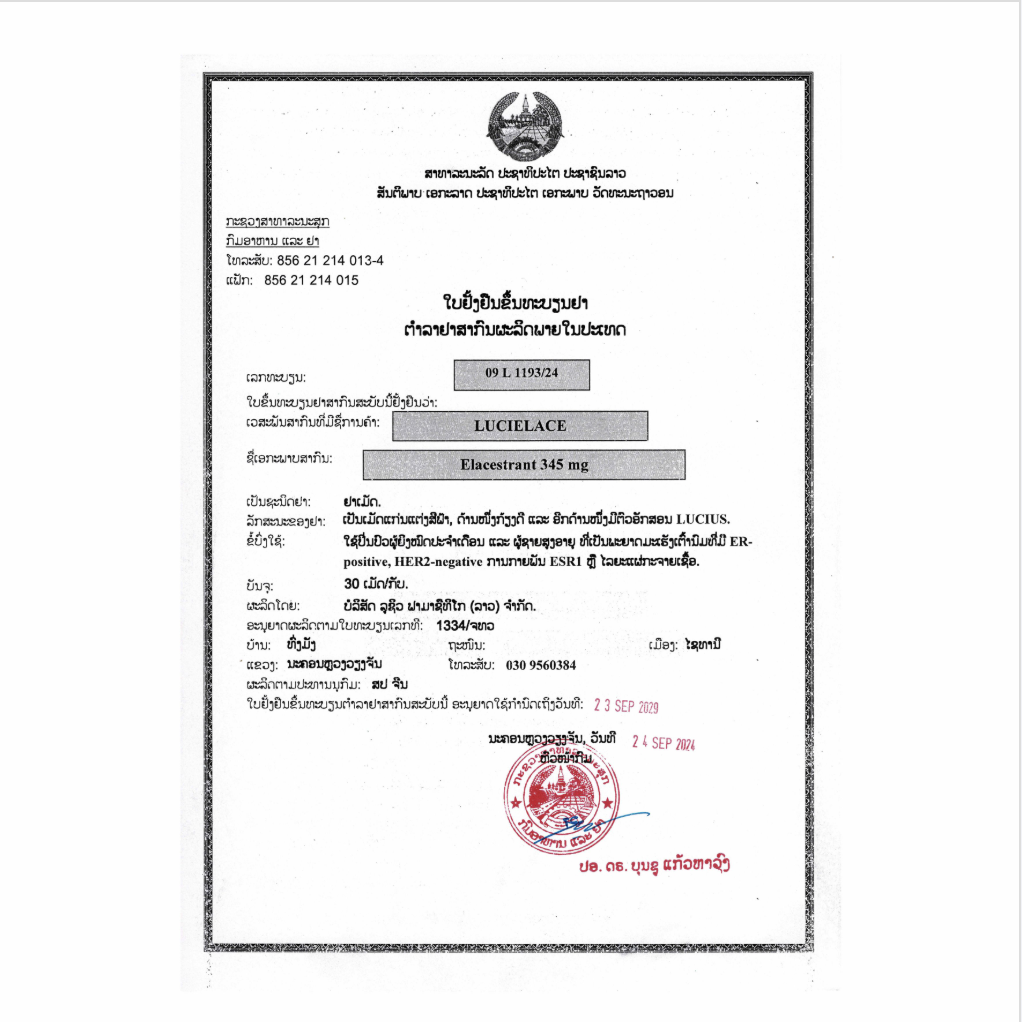

HIGHLIGHTS OF PRESCRIBING INFORMATION
These highlights do not include all the information needed to use LuciElace safely and effectively. See full prescribing information for LuciElace.
INDICATIONS AND USAGE
LuciElace is an estrogen receptor antagonist indicated for:
• treatment of postmenopausal women or adult men, with ERpositive, HER2-negative, ESR1-mutated advanced or metastatic breast cancer with disease progression following at least one line of endocrine therapy.
DOSAGE AND ADMINISTRATION
• Select patients for treatment with LuciElace based on the presence of ESR1 mutations.
• The recommended dosage of LuciElace is one 345 mg tablet taken orally, once daily, with food.
• Dose interruption, reduction, or permanent discontinuation may be required due to adverse reactions.
DOSAGE FORMS AND STRENGTHS
Tablets: 345 mg×30 tablets
CONTRAINDICATIONS
None.
WARNINGS AND PRECAUTIONS
• Dyslipidemia: LuciElace may cause hypercholesterolemia and hypertriglyceridemia. Monitor lipid profile prior to starting treatment and periodically thereafter.
• Embryo-Fetal Toxicity: LuciElace can cause fetal harm. Advise of the potential risk to a fetus and to use effective contraception.
ADVERSE REACTIONS
The most common (>10%) adverse reactions, including laboratory abnormalities, of LuciElace were musculoskeletal pain, nausea, increased cholesterol, increased AST, increased triglycerides, fatigue, decreased hemoglobin, vomiting, increased ALT, decreased sodium, increased creatinine, decreased appetite, diarrhea, headache, constipation, abdominal pain, hot flush, and dyspepsia.
DRUG INTERACTIONS
• Strong and Moderate CYP3A4 Inducers: Avoid concomitant use with LuciElace.
• Strong and Moderate CYP3A4 Inhibitors: Avoid concomitant use with LuciElace.
USE IN SPECIFIC POPULATIONS
• Lactation: Advise not to breastfeed.
• Hepatic impairment: Avoid use in patients with severe hepatic impairment (Child-Pugh C). Reduce the dosage for patients with moderate hepatic impairment (Child-Pugh B).
Storage
Store at 20℃ to 25℃ (68℉ to 77℉), excursions permitted between 15℃ and 30℃ (59℉ and 86℉) [see USP Controlled Room Temperature]. Protect from moisture.