
HIGHLIGHTS OF PRESCRIBING INFORMATION
These highlights do not include all the information needed to use LuciBinim safely and effectively. See full prescribing information for LuciBinim.
INDICATIONS AND USAGE
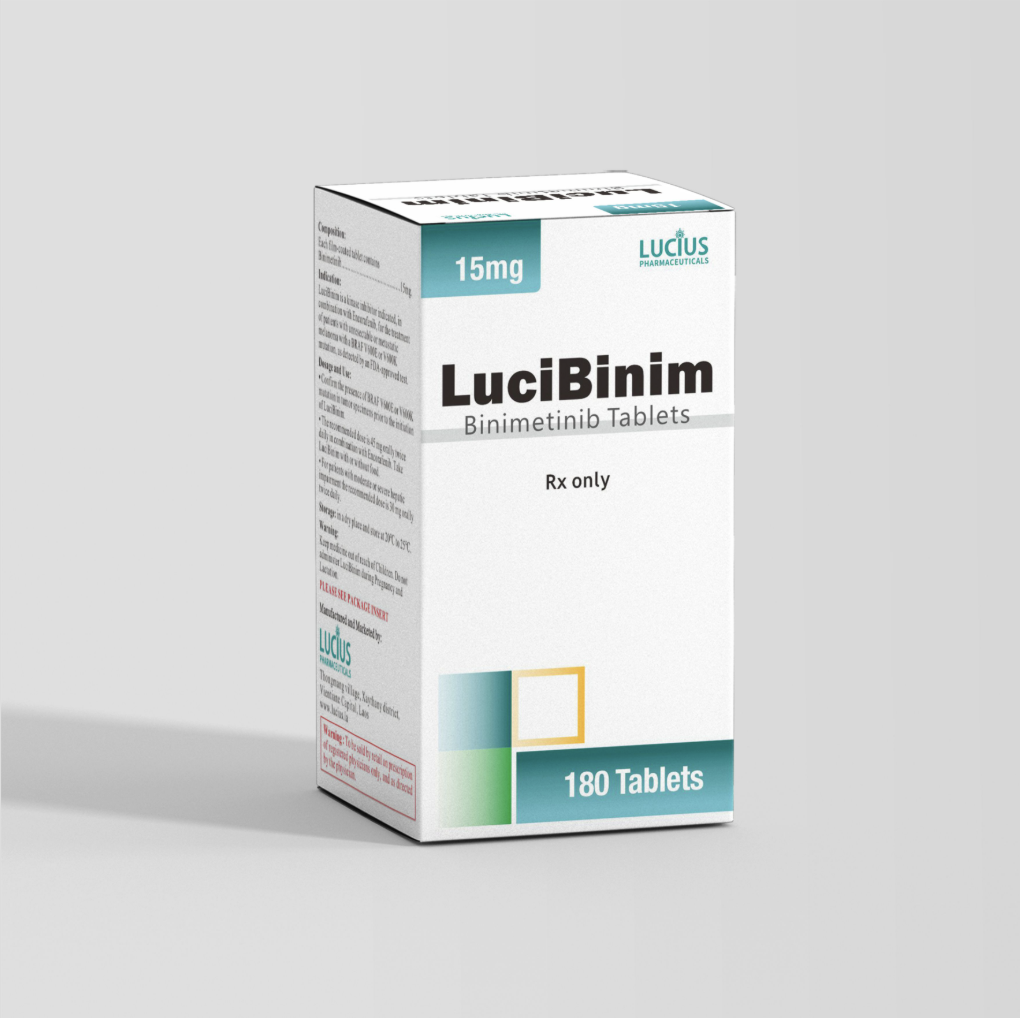
LuciBinim is a kinase inhibitor indicated, in combination with Encorafenib, for the treatment of patients with unresectable or metastatic melanoma with a BRAF V600E or V600K mutation, as detected by an FDA-approved test.
DOSAGE AND ADMINISTRATION
Confirm the presence of BRAF V600E or V600K mutation in tumor specimens prior to the initiation of LuciBinim.
The recommended dose is 45 mg orally twice daily in combination with Encorafenib. Take LuciBinim with or without food.
For patients with moderate or severe hepatic impairment the recommended dose is 30 mg orally twice daily.
DOSAGE FORMS AND STRENGTHS
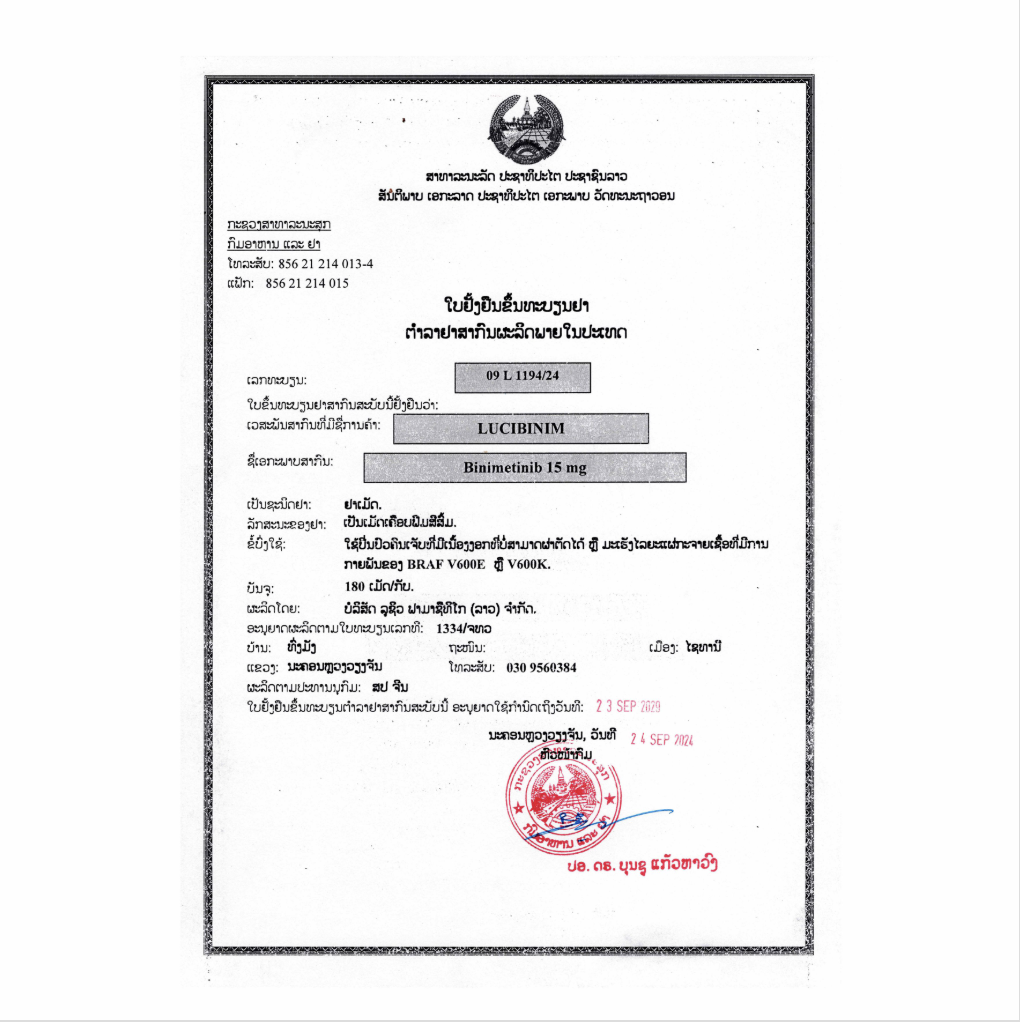
Tablets: 15 mg×180 tablets
CONTRAINDICATIONS
None.
WARNINGS AND PRECAUTIONS
Cardiomyopathy: Assess left ventricular ejection fraction (LVEF) before initiating treatment, after one month of treatment, then every 2 to 3 months thereafter. The safety of LuciBinim has not been established in patients with LVEF below 50%.
Venous Thromboembolism: Deep vein thrombosis and pulmonary embolism can occur.
Ocular Toxicities: Serous retinopathy, retinal vein occlusion (RVO) and uveitis have occurred. Perform an ophthalmologic evaluation at regular intervals and for any visual disturbances.
Interstitial Lung Disease (ILD): Assess new or progressive unexplained pulmonary symptoms or findings for possible ILD.
Hepatotoxicity: Monitor liver function tests before and during treatment and as clinically indicated.
Rhabdomyolysis: Monitor creatine phosphokinase and creatinine periodically and as clinically indicated.
Hemorrhage: Major hemorrhagic events can occur.
Embryo-Fetal Toxicity: Can cause fetal harm. Advise females with reproductive potential of potential risk to the fetus and to use effective contraception.
ADVERSE REACTIONS
Most common adverse reactions (≥ 25%) for LuciBinim, in combination with encorafenib, are fatigue, nausea, diarrhea, vomiting, and abdominal pain.
DRUG INTERACTIONS
No clinically important drug interactions have been observed with LuciBinim.
USE IN SPECIFIC POPULATIONS
Lactation: Advise not to breastfeed.
Storage
Store at 20℃ to 25℃ (68℉ to 77℉), excursions permitted between 15℃ and 30℃ (59℉ and 86℉) [see USP Controlled Room Temperature]. Protect from moisture.