
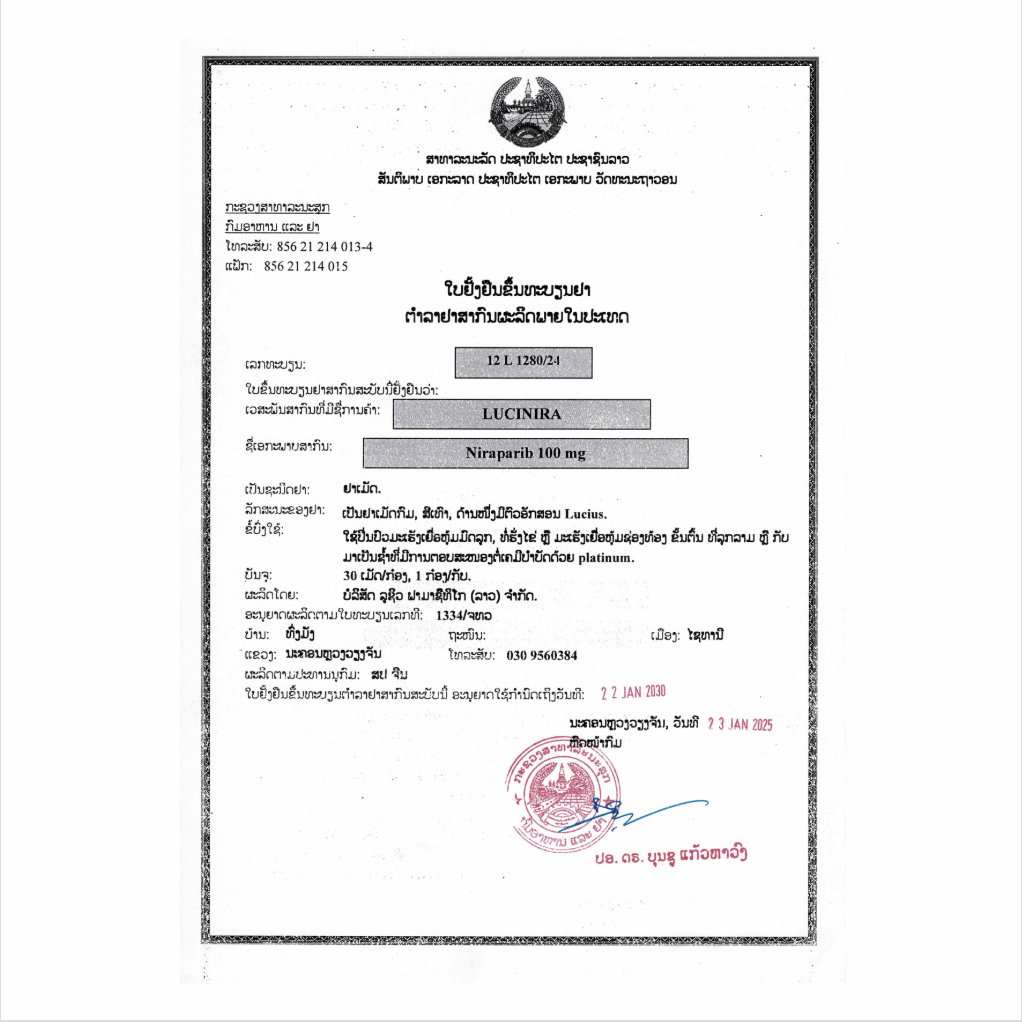

HIGHLIGHTS OF PRESCRIBING INFORMATION
These highlights do not include all the information needed to use LuciNira safely and effectively. See full prescribing information for LuciNira.
INDICATIONS AND USAGE
LuciNira is a poly (ADP-ribose) polymerase (PARP) inhibitor indicated:
• for the maintenance treatment of adult patients with advanced epithelial ovarian, fallopian tube, or primary peritoneal cancer who are in a complete or partial response to first-line platinum-based chemotherapy.
• for the maintenance treatment of adult patients with deleterious or suspected deleterious germline BRCA-mutated recurrent epithelial ovarian, fallopian tube, or primary peritoneal cancer who are in a complete or partial response to platinum-based chemotherapy. Select patients for therapy based on an FDA-approved companion diagnostic for LuciNira.
DOSAGE AND ADMINISTRATION
• First-line maintenance treatment of advanced ovarian cancer:
• For patients weighing<77 kg (<170 lbs) OR with a platelet count <150,000/mcL, the recommended dosage is 200 mg taken orally once daily.
• For patients weighing ≥77 kg (≥170 lbs) AND a platelet count ≥150,000/ mcL, the recommended dosage is 300 mg taken orally once daily.
• Maintenance treatment of recurrent germline BRCA-mutated ovarian cancer: The recommended dosage is 300 mg taken orally once daily.
• Continue treatment until disease progression or unacceptable toxicity.
• LuciNira may be taken with or without food.
• For adverse reactions, consider interruption of treatment, dose reduction, or dose discontinuation.
• For patients with moderate hepatic impairment, reduce the starting dosage of niraparib to 200 mg once daily.
DOSAGE FORMS AND STRENGTHS
Tablets: 100 mg×30 tablets
CONTRAINDICATIONS
None
WARNINGS AND PRECAUTIONS
• Myelodysplastic Syndrome/Acute Myeloid Leukemia (MDS/AML): MDS/AML occurred in patients exposed to LuciNira, and some cases were fatal. Monitor patients for hematological toxicity and discontinue if MDS/AML is confirmed.
• Bone Marrow Suppression: Test complete blood counts weekly for the first month, monthly for the next 11 months, and periodically thereafter for clinically significant changes.
• Hypertension and Cardiovascular Effects: Monitor blood pressure and heart rate at least weekly for the first 2 months, then monthly for the first year and periodically thereafter during treatment with LuciNira. Manage with antihypertensive medications and adjustment of the dose of LuciNira, if necessary.
• Posterior Reversible Encephalopathy Syndrome (PRES): PRES has occurred in patients treated with LuciNira. Discontinue LuciNira if PRES is confirmed.
• Embryo-Fetal Toxicity: LuciNira can cause fetal harm. Advise females of reproductive potential of the potential risk to a fetus and to use effective contraception.
ADVERSE REACTIONS
Most common adverse reactions (incidence ≥10%) in patients who received LuciNira were nausea, thrombocytopenia, anemia, fatigue, constipation, musculoskeletal pain, abdominal pain, vomiting, neutropenia, decreased appetite, leukopenia, insomnia, headache, dyspnea, rash, diarrhea, hypertension, cough, dizziness, acute kidney injury, urinary tract infection, and hypomagnesemia.
USE IN SPECIFIC POPULATIONS
Lactation: Advise not to breastfeed.
Storage
Store at 20°C to 25°C (68°F to 77°F), excursions permitted between 15°C and 30°C (59°F and 86°F) [see USP Controlled Room Temperature]. Protect from moisture.