
HIGHLIGHTS OF PRESCRIBING INFORMATION
These highlights do not include all the information needed to use LuciOdevi safely and effectively. See full prescribing information for LuciOdevi.
INDICATIONS AND USAGE
LuciOdevi is an ileal bile acid transporter (IBAT) inhibitor indicated for:
Progressive Familial Intrahepatic Cholestasis (PFIC)
• the treatment of pruritus in patients 3 months of age and older with progressive familial intrahepatic cholestasis (PFIC).
Limitation of Use:
LuciOdevi may not be effective in a subgroup of PFIC type 2 patients with specific ABCB11 variants resulting in non-functional or complete absence of the bile salt export pump protein.
Alagille Syndrome (ALGS)
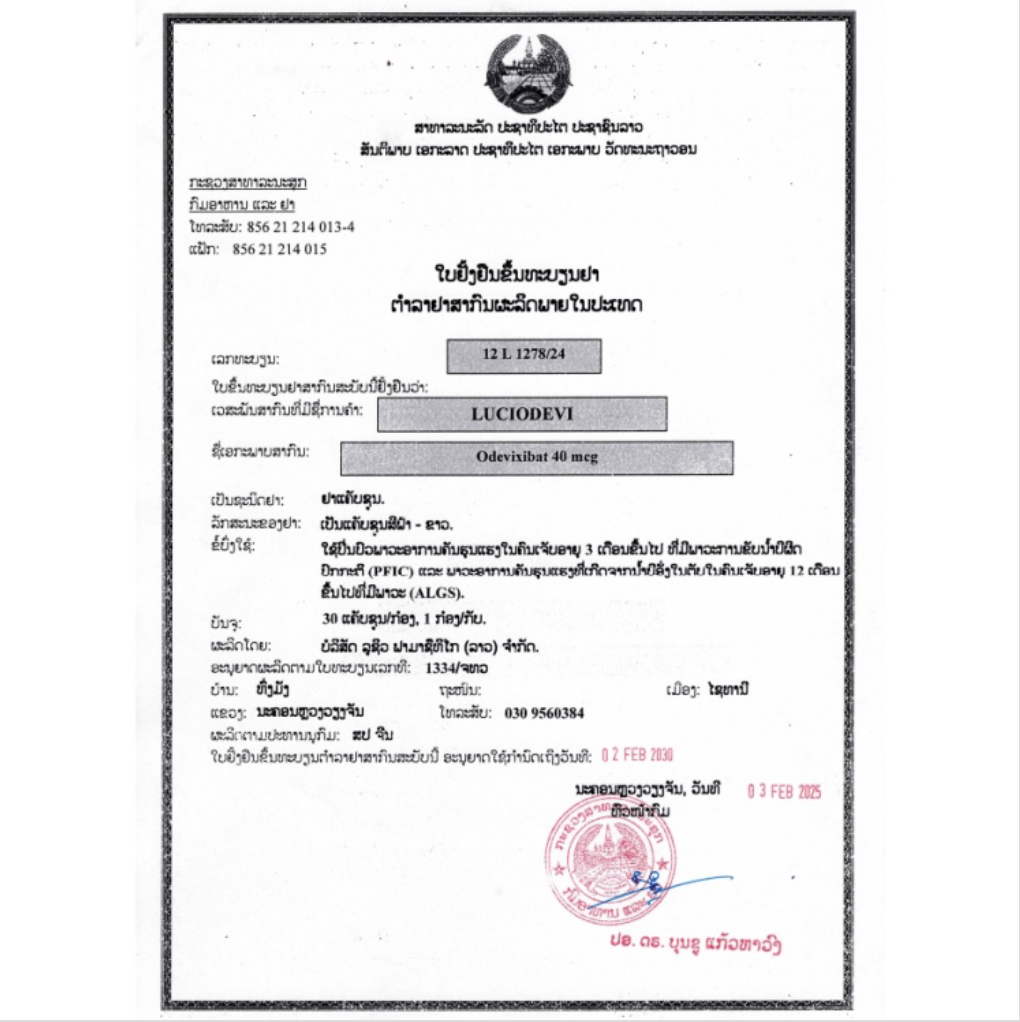
• the treatment of cholestatic pruritus in patients 12 months of age and older with Alagille syndrome (ALGS).
DOSAGE AND ADMINISTRATION
Recommended Dosage
PFIC:
• Patients 3 months and older: 40 mcg/kg taken orally once daily.
• If there is no improvement in pruritus after 3 months, the dosage may be increased in 40 mcg/kg increments up to 120 mcg/kg once daily, not to exceed a daily dosage of 6 mg/day.
ALGS:
• Patients 12 months and older: 120 mcg/kg taken orally once daily.
Preparation and Administration Instructions
• Administer LuciOdevi in the morning with a meal.
• Do not crush or chew capsules.
• See full prescribing information for preparation and administration instructions.
DOSAGE FORMS AND STRENGTHS
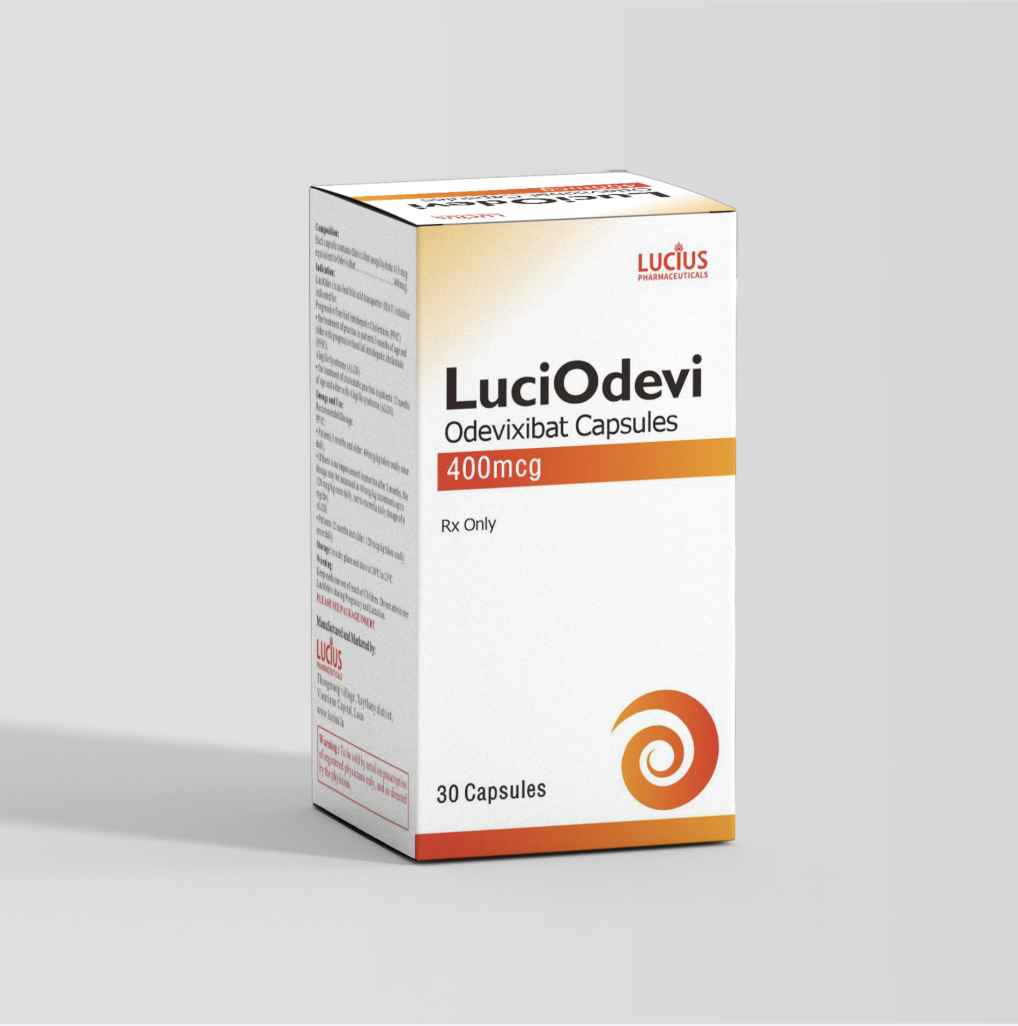
Capsules: 400 mcg×30 capsules
CONTRAINDICATIONS
None
WARNINGS AND PRECAUTIONS
• Liver Test Abnormalities: Obtain baseline liver tests and monitor during treatment. Dose reduction or treatment interruption may be required if abnormalities occur. For persistent or recurrent liver test abnormalities, consider treatment discontinuation.
• Diarrhea: Treat dehydration. Treatment interruption or discontinuation may be required for persistent diarrhea.
• Fat-Soluble Vitamin (FSV) Deficiency: Obtain baseline levels and monitor during treatment. Supplement if deficiency is observed. If FSV deficiency persists or worsens despite FSV supplementation, discontinue treatment.
ADVERSE REACTIONS
PFIC: Most common adverse reactions (>2%) are liver test abnormalities, diarrhea, abdominal pain, vomiting, and fat-soluble vitamin deficiency.
ALGS: Most common adverse reactions (>5%) are diarrhea, abdominal pain, hematoma, and decreased weight.
USE IN SPECIFIC POPULATIONS
Pregnancy: Based on animal data, may cause cardiac malformations.
Storage
Store at 20°C to 25°C (68°F to 77°F), excursions permitted between 15°C and 30°C (59°F and 86°F) [see USP Controlled Room Temperature]. Protect from moisture.