
HIGHLIGHTS OF PRESCRIBING INFORMATION
These highlights do not include all the information needed to use LuciPazo safely and effectively. See full prescribing information for LuciPazo.
INDICATIONS AND USAGE
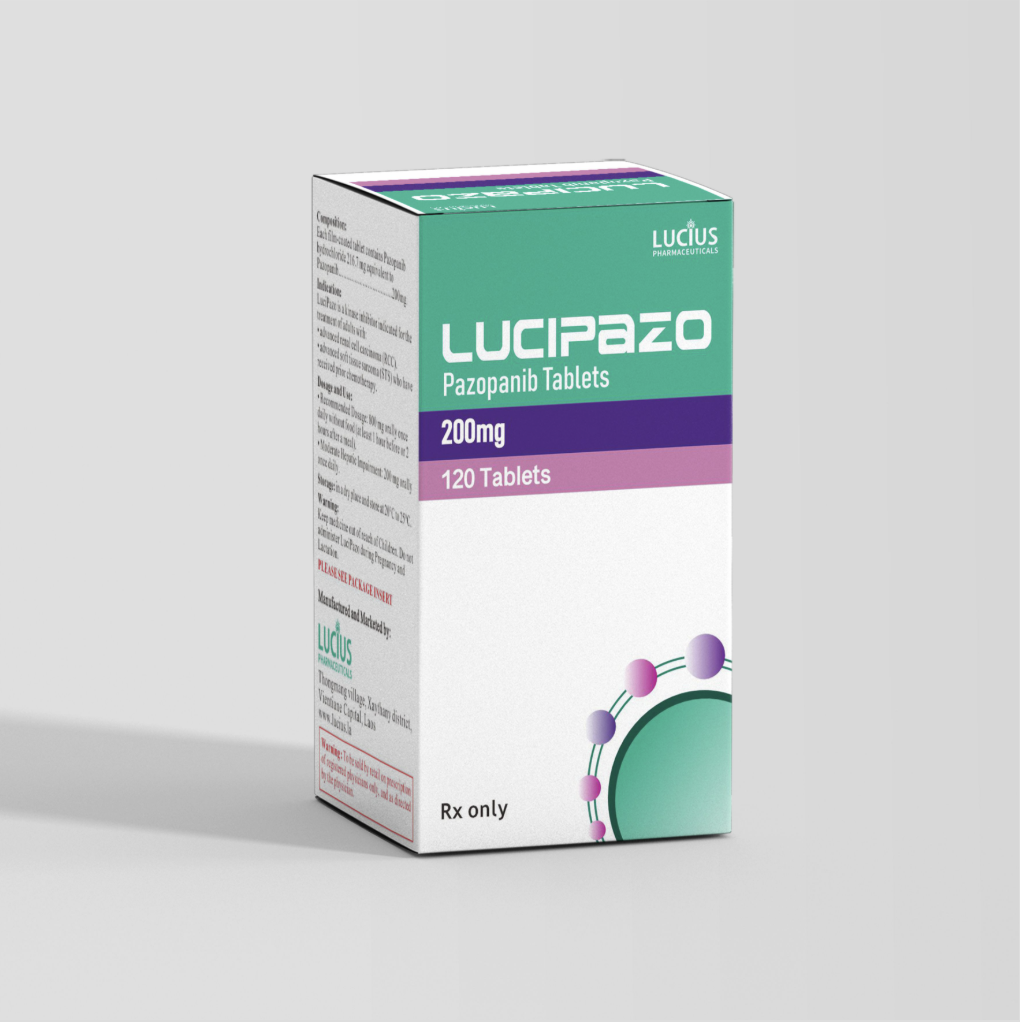
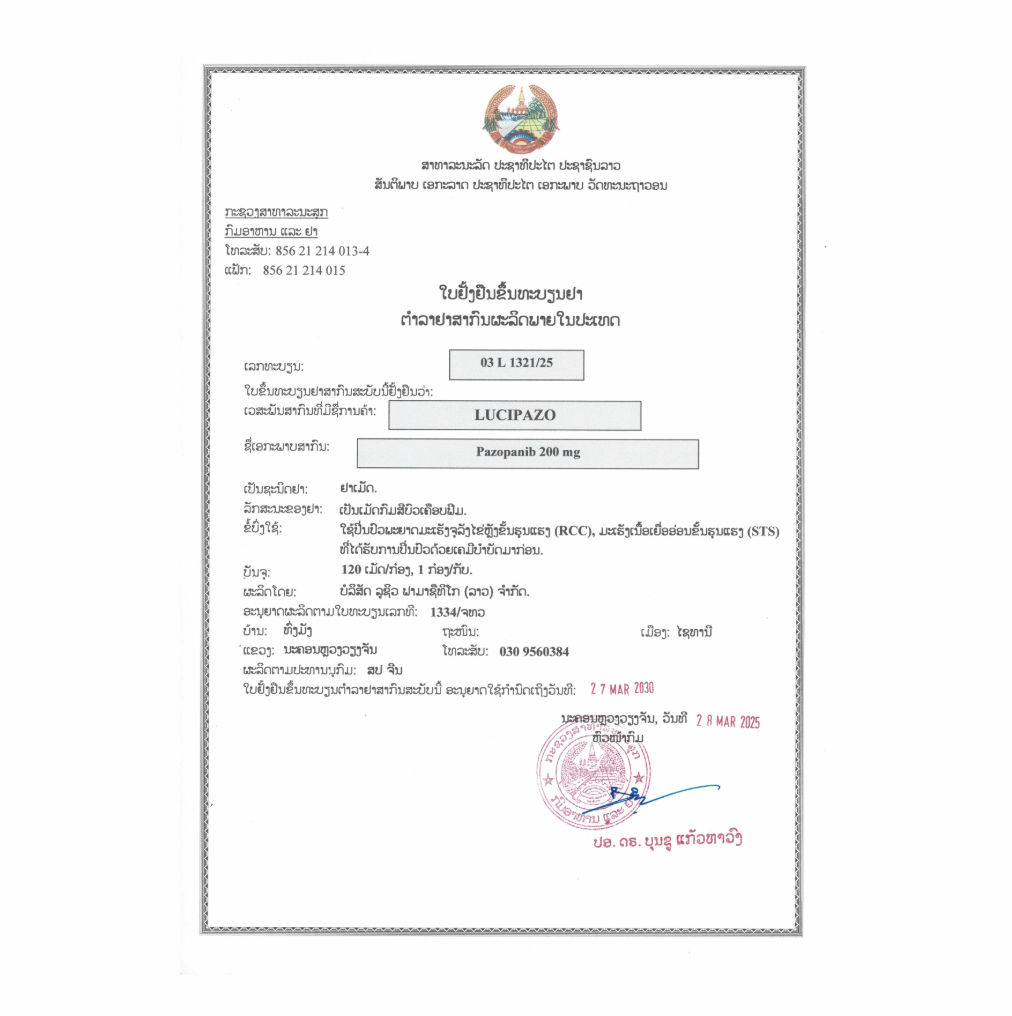
LuciPazo is a kinase inhibitor indicated for the treatment of adults with:
• advanced renal cell carcinoma (RCC).
• advanced soft tissue sarcoma (STS) who have received prior chemotherapy.
Limitations of Use: The efficacy of LuciPazo for the treatment of patients with adipocytic soft tissue sarcoma or gastrointestinal stromal tumors has not been demonstrated.
DOSAGE AND ADMINISTRATION
• Recommended Dosage: 800 mg orally once daily without food (at least 1 hour before or 2 hours after a meal).
• Moderate Hepatic Impairment: 200 mg orally once daily.
DOSAGE FORMS AND STRENGTHS
Tablets: 200 mg×120 tablets
CONTRAINDICATIONS
None.
WARNINGS AND PRECAUTIONS
• Hepatic Toxicity: Severe and fatal hepatotoxicity has occurred. Monitor liver tests at baseline, regularly during treatment and as clinically indicated. Withhold LuciPazo and resume at reduced dose with continued weekly monitoring for 8 weeks, or permanently discontinue with weekly monitoring until resolution based on severity of hepatotoxicity.
• QT Prolongation and Torsades de Pointes: Monitor patients who are at significant risk of developing QT interval prolongation. Monitor electrocardiograms (ECGs) and electrolytes at baseline and as clinically indicated. Correct hypokalemia, hypomagnesemia, and hypocalcemia prior to initiating LuciPazo and during treatment.
• Cardiac Dysfunction: Cardiac dysfunction, including decreased left ventricular ejection fraction (LVEF) and congestive heart failure, have occurred. Monitor blood pressure and manage as appropriate. Monitor for clinical signs or symptoms of congestive heart failure. Conduct baseline and periodic evaluation of LVEF in patients at risk of cardiac dysfunction. Withhold or permanently discontinue LuciPazo based on severity of cardiac dysfunction.
• Hemorrhagic Events: Fatal hemorrhagic events have occurred. LuciPazo has not been studied in patients who have a history of hemoptysis, cerebral hemorrhage, or clinically significant gastrointestinal hemorrhage in the past 6 months. Withhold LuciPazo and resume at reduced dose or permanently discontinue based on severity of hemorrhagic events.
• Arterial Thromboembolic Events: Arterial thromboembolic events have been observed and can be fatal. LuciPazo has not been studied in patients who have had an arterial thromboembolic event within the previous 6 months. Permanently discontinue LuciPazo in case of an arterial thromboembolic event.
• Venous Thromboembolic Events: Venous thromboembolic events (VTEs) have been observed, including fatal pulmonary emboli (PE). Monitor for signs and symptoms of VTE and PE. Withhold LuciPazo and then resume at same dose or permanently discontinue based on severity of VTE.
• Thrombotic Microangiopathy: Thrombotic microangiopathy (TMA), including thrombotic thrombocytopenic purpura (TTP) and hemolytic uremic syndrome (HUS), has been observed. Permanently discontinue LuciPazo if TMA occurs.
• Gastrointestinal Perforation and Fistula: Fatal perforation events have occurred. Monitor for signs and symptoms of gastrointestinal perforation or fistula. Withhold LuciPazo in case of Grade 2 or 3 gastrointestinal fistula and resume based on medical judgement. Permanently discontinue LuciPazo in case of gastrointestinal perforation or Grade 4 gastrointestinal fistula.
• Interstitial Lung Disease/Pneumonitis: Can be fatal. Monitor patients for pulmonary symptoms. Permanently discontinue LuciPazo in patients who develop interstitial lung disease (ILD) or pneumonitis.
• Posterior Reversible Encephalopathy Syndrome: Can be fatal. Permanently discontinue LuciPazo in patients who develop posterior reversible encephalopathy syndrome (PRES).
• Hypertension: Hypertension, including hypertensive crisis, has been observed. Do not initiate LuciPazo in patients with uncontrolled hypertension. Optimize blood pressure prior to initiating LuciPazo. Monitor blood pressure as clinically indicated and initiate and adjust antihypertensive therapy as appropriate. Withhold and then dose reduce LuciPazo or permanently discontinue based on severity of hypertension.
• Risk of Impaired Wound Healing: Withhold LuciPazo for at least 1 week prior to elective surgery. Do not administer for at least 2 weeks following major surgery and until adequate wound healing. The safety of resumption of LuciPazo after resolution of wound healing complications has not been established.
• Hypothyroidism: Monitor thyroid tests at baseline, during treatment and as clinically indicated and manage hypothyroidism as appropriate.
• Proteinuria: Perform baseline and periodic urinalysis during treatment with follow up measurement of 24-hour urine protein as clinically indicated. Withhold LuciPazo then resume at a reduced dose or permanently discontinue based on severity of proteinuria. Permanently discontinue in patients with nephrotic syndrome.
• Tumor Lysis Syndrome: Cases of tumor lysis syndrome (TLS) (some fatal) have been reported in patients with RCC and STS. Closely monitor patients at risk and treat as clinically indicated.
• Infection: Serious infections (with or without neutropenia), some with fatal outcome, have been reported. Monitor for signs and symptoms of infection. Institute appropriate anti-infective therapy promptly. Consider interruption or discontinuation of LuciPazo.
• Embryo-Fetal Toxicity: Can cause fetal harm. Advise females of reproductive potential of the potential risk to the fetus and patients to use effective contraception.
ADVERSE REACTIONS
• The most common adverse reactions in patients with RCC (≥ 20%) are diarrhea, hypertension, hair color changes (depigmentation), nausea, anorexia, and vomiting.
• The most common adverse reactions in patients with STS (≥ 20%) are fatigue, diarrhea, nausea, decreased weight, hypertension, decreased appetite, vomiting, tumor pain, hair color changes, musculoskeletal pain, headache, dysgeusia, dyspnea, and skin hypopigmentation.
DRUG INTERACTIONS
• Strong CYP3A4 Inhibitors: Avoid coadministration of LuciPazo with strong CYP3A4 inhibitors. If coadministration cannot be avoided, reduce the dose of LuciPazo.
• Strong CYP3A4 Inducers: Consider an alternate concomitant medication with no or minimal enzyme induction potential. LuciPazo is not recommended if chronic use of strong CYP3A4 inducers cannot be avoided.
• CYP Substrates: Coadministration of LuciPazo with agents with narrow therapeutic windows that are metabolized by CYP3A4, CYP2D6, or CYP2C8 is not recommended.
• Concomitant Use With Simvastatin: Concomitant use of LuciPazo with simvastatin increases the risk of alanine aminotransferase (ALT) elevations. Increase to weekly monitoring of liver function as recommended. Withhold LuciPazo and resume at reduced dose, or permanently discontinue based on severity of hepatotoxicity.
• Concomitant Use With Gastric Acid-Reducing Agents: Avoid concomitant use of LuciPazo with gastric acid-reducing agents. Consider short-acting antacids in place of proton pump inhibitors (PPIs) and H2-receptor antagonists. Separate antacid and pazopanib dosing by several hours.
USE IN SPECIFIC POPULATIONS
• Lactation: Advise not to breastfeed.
Storage
Store at 20℃ to 25℃ (68℉ to 77℉), excursions permitted between 15℃ and 30℃ (59℉ and 86℉) [see USP Controlled Room Temperature]. Protect from moisture.