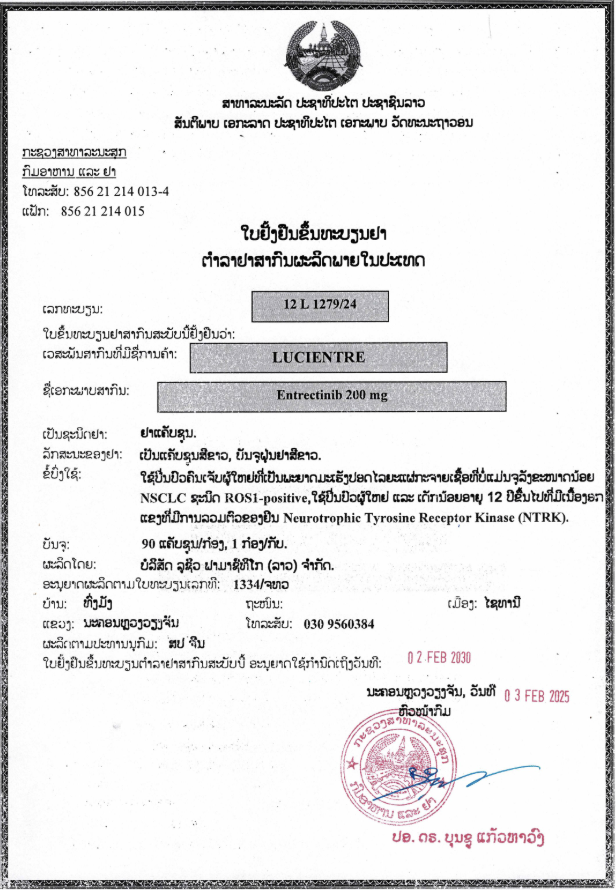
Lucius Entrectinib™ | Instruction Manual v.2.1
Designation: Central Nervous System-Active Tyrosine Kinase Inhibitor
Model: Lucius Entrectinib
Strength: 100mg / 200mg
Indication: NTRK Fusion-Positive Solid Tumors & ROS1-Positive NSCLC
1. SYSTEM OVERVIEW
The Lucius Entrectinib unit is a potent, orally bioavailable tyrosine kinase inhibitor specifically engineered to target:
-
NTRK1/2/3 (neurotrophic tyrosine receptor kinase) fusions
-
ROS1 (ROS proto-oncogene 1) rearrangements
It is uniquely designed to achieve therapeutic concentrations in the central nervous system, making it effective for both intracranial and extracranial disease.
Mechanism of Action:
Potently inhibits TRKA/B/C, ROS1, and ALK kinase activity, leading to apoptosis in tumor cells harboring these genetic alterations.
2. INITIALIZATION & DOSING
Standard Operating Protocol:
-
Adults: 600mg orally once daily
-
Pediatrics: Body surface area-based dosing (≥ 1.0 m²: 600mg daily)
Administration Guidelines:
-
Administer with or without food
-
Do not crush, open, or dissolve capsules
-
If vomiting occurs after dosing, do not redose; resume next scheduled dose
Dose Modification Schedule:
| Toxicity Grade | Recommended Action |
|---|---|
| Grade 3 | Interrupt until resolves to ≤Grade 1, then resume at 400mg daily |
| Grade 4 | Interrupt until resolves to ≤Grade 1, then resume at 200mg daily or permanently discontinue |
3. MONITORING & FEEDBACK LOOPS
Baseline & Routine Surveillance Required:
-
Molecular Testing: NTRK or ROS1 status confirmation via NGS or FISH
-
Cardiac: ECG (baseline, 1 month, then every 3 months) - monitor for QTc prolongation
-
Neurologic: Cognitive and motor function assessment
-
Metabolic: Serum electrolytes (especially potassium, calcium, magnesium)
-
Ophthalmic: Comprehensive ophthalmological exam (baseline and periodically)
Performance Metrics:
-
Overall response rate: ~60-70% in NTRK fusion-positive tumors
-
Intracranial response rate: ~50-60%
4. ADVERSE EVENT PROTOCOLS
| Event | Frequency | Management |
|---|---|---|
| Cognitive Impairment | ~20% | Dose reduction; cognitive rehabilitation |
| Weight Increase | ~20% | Nutritional counseling; monitor metabolic parameters |
| Fatigue | ~15% | Schedule activities; consider dose interruption |
| QTc Prolongation | ~3% | Monitor ECG; correct electrolytes; dose modification |
| Vision Disorders | ~5% | Ophthalmologic evaluation; dose interruption if severe |
5. DRUG INTERACTION ALGORITHMS
Contraindicated Combinations:
-
Strong CYP3A Inducers (rifampin, carbamazepine, St. John's wort) - reduces entrectinib exposure by ~80%
-
Strong CYP3A Inhibitors (ketoconazole, itraconazole) - increases entrectinib exposure by ~150%
Use With Caution:
-
QT-prolonging drugs (antiarrhythmics, antipsychotics, antibiotics)
-
Acid-reducing agents (PPIs, H2 blockers, antacids) - may reduce absorption
6. SAFETY PROTOCOLS
-
Cognitive Effects: Patients should avoid driving or operating machinery if experiencing cognitive impairment
-
Pregnancy: Contraindicated - may cause fetal harm (verify pregnancy status prior to initiation)
-
Hepatic Impairment: Reduce dose in severe impairment (Child-Pugh C)
-
Missed Dose: If >12 hours late, skip dose and resume next scheduled dose
7. STORAGE & HANDLING
-
Store at 20°-25°C (68°-77°F)
-
Keep in original container with desiccant
-
Protect from moisture and light
-
Dispense only in original packaging
8. DISCONTINUATION CRITERIA
-
Disease progression
-
Unmanageable Grade 4 adverse reactions
-
Persistent Grade 3 toxicities despite dose reductions
-
Patient preference after comprehensive discussion
whatsapp:+852 61905607
wechat :yindu7689