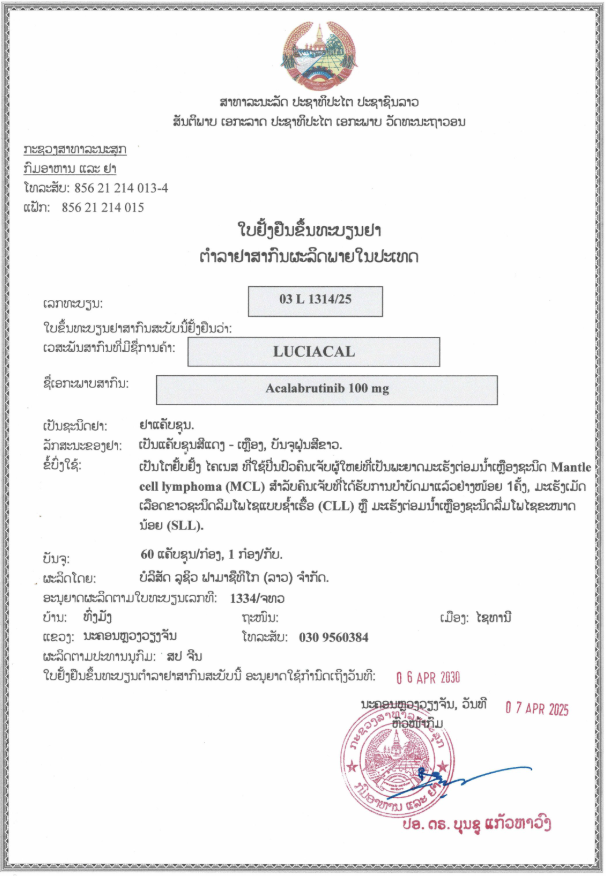
Lucius Acalabrutinib Patient Information Leaflet
Brand Name: Calquence®
Generic Name: Acalabrutinib (a-ka-la-BRU-ti-nib)
Manufacturer: Lucius Pharmaceuticals
Dosage: This leaflet primarily covers the 100 mg capsule strength.
1. What is Lucius Acalabrutinib and what is it used for?
Lucius Acalabrutinib is a prescription medicine belonging to a class of drugs called Bruton's tyrosine kinase (BTK) inhibitors. It works by blocking a specific protein (BTK) that helps cancer cells, particularly certain blood cancer cells, to survive and multiply.
It is used to treat adults with:
-
Mantle Cell Lymphoma (MCL): A type of non-Hodgkin's lymphoma, often after at least one prior therapy.
-
Chronic Lymphocytic Leukemia (CLL) / Small Lymphocytic Lymphoma (SLL): A type of cancer that affects white blood cells.
2. Before you take Lucius Acalabrutinib
Do NOT take this medicine if you:
-
Are allergic to acalabrutinib or any of the other ingredients in this medicine.
Warnings and Precautions:
Talk to your doctor before taking Lucius Acalabrutinib if you have or have had:
-
Bleeding Problems: This drug can increase the risk of bleeding and bruising. Report any unusual bleeding or bruising to your doctor.
-
Infections: Acalabrutinib can lower your immune system's ability to fight infections. Tell your doctor immediately if you have a fever, chills, flu-like symptoms, or any signs of an infection.
-
Heart Rhythm Problems (Atrial Fibrillation/Flutter): This medication can cause irregular heartbeats. Tell your doctor if you feel your heart is pounding, beating irregularly, or if you have dizziness, shortness of breath, or chest discomfort.
-
Second Primary Cancers: There is a risk of developing other cancers, including skin cancer. Your doctor may perform skin exams, and you should use sunscreen and protective clothing.
-
Cytopenias: The drug can cause low blood cell counts (white blood cells, platelets, red blood cells). Your doctor will perform regular blood tests to monitor this.
Pregnancy and Breastfeeding:
-
Pregnancy: This drug may harm an unborn baby. Use effective contraception during treatment and for at least 1 week after your last dose. Inform your doctor immediately if you become pregnant.
-
Breastfeeding: Do not breastfeed during treatment and for at least 2 weeks after your last dose, as the drug may pass into breast milk.
Other Medicines and Supplements:
Tell your doctor about ALL the medicines you take, including prescription, over-the-counter, vitamins, and herbal supplements. This is extremely important for drugs that affect liver enzymes, such as:
-
Strong CYP3A inhibitors: Ketoconazole, itraconazole, clarithromycin, ritonavir, etc. (Your doctor may tell you to avoid these or adjust your dose).
-
Strong CYP3A inducers: Rifampin, carbamazepine, St. John's Wort, etc. (These may make acalabrutinib less effective).
3. How to take Lucius Acalabrutinib
-
Dosage: The typical dose is one 100 mg capsule, taken approximately every 12 hours (twice daily).
-
Administration:
-
Take the capsule(s) by mouth with a full glass of water.
-
Do not open, break, or chew the capsules.
-
You can take it with or without food.
-
-
Timing: Try to take your doses at the same times each day (e.g., 8 AM and 8 PM) to maintain a constant level of the drug in your body.
-
Missed Dose:
-
If you miss a dose by less than 3 hours, take it as soon as you remember.
-
If you miss a dose by more than 3 hours, skip the missed dose and take your next dose at the regular time.
-
Do not take a double dose to make up for a missed one.
-
-
Overdose: In case of overdose, contact your doctor or go to the nearest emergency room immediately.
4. Possible Side Effects
Common Side Effects (may affect many people):
-
Headache (very common)
-
Diarrhea
-
Muscle and joint pain (arthralgia, myalgia)
-
Rash
-
Nausea
-
Bruising easily
-
Fatigue
-
Low blood cell counts (neutrophils, platelets, red blood cells)
Serious Side Effects (Contact your doctor immediately if you experience any of these):
-
Signs of serious bleeding: unusual bleeding from gums, nose, or wounds; blood in urine, stool, or vomit (may look like coffee grounds); severe headaches; dizziness or weakness.
-
Signs of infection: fever of 100.4°F (38°C) or higher, chills, cough, shortness of breath, night sweats.
-
Signs of heart rhythm problems: feeling your heart beat irregularly or rapidly (palpitations), dizziness, fainting, lightheadedness, shortness of breath.
-
Severe skin reactions: painful red or purple skin rash with blisters or peeling.
5. How to Store Lucius Acalabrutinib
-
Store at room temperature (20°C to 25°C or 68°F to 77°F). Brief excursions permitted between 15°C and 30°C (59°F to 86°F).
-
Keep in the original container to protect from moisture and light.
-
Keep out of reach of children and pets.
-
Do not use this medicine after the expiration date printed on the pack.
6. Contents of the Pack and Other Information
-
Active Ingredient: Acalabrutinib (100 mg per capsule).
-
Inactive Ingredients: The capsule shell contains gelatin, titanium dioxide, and other ingredients. The internal contents include microcrystalline cellulose, etc.
whatsapp:+852 61905607
wechat:yindu7689