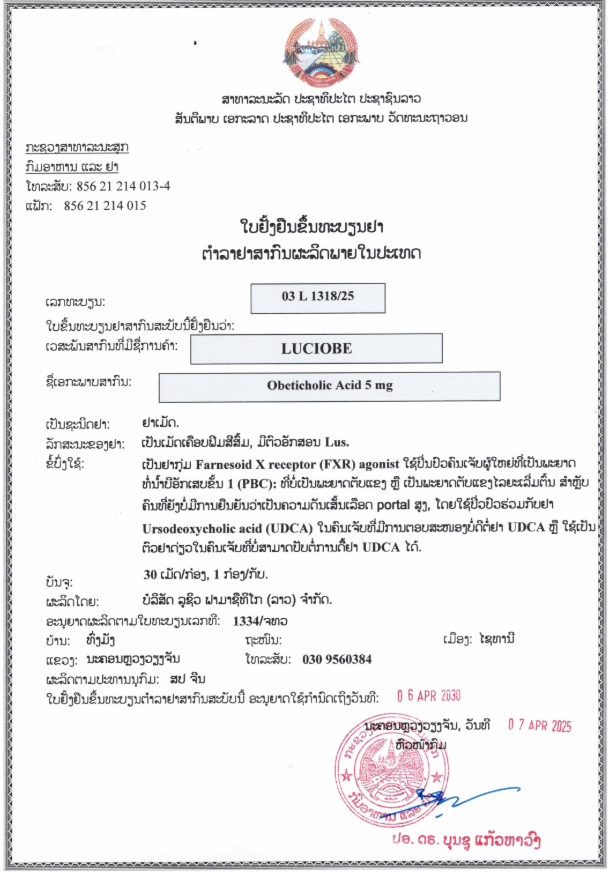
Drug Information Summary: Lucius Obeticholic Acid Tablets
Disclaimer: This is a synthesized summary based on the known pharmacological profile of Obeticholic Acid. This is not the official manufacturer's leaflet and does not replace professional medical advice. Obeticholic Acid is a prescription drug with serious risks and must only be taken under the strict supervision of a gastroenterologist or hepatologist.
1. Brand and Generic Name
-
Generic Name: Obeticholic Acid
-
Brand/Manufacturer: Lucius Pharmaceuticals (Laos) - Note: This is a generic/manufactured version. The original brand name is Ocaliva®.
2. What is Obeticholic Acid and what is it used for?
-
Obeticholic Acid is a farnesoid X receptor (FXR) agonist.
-
It is used for the treatment of Primary Biliary Cholangitis (PBC), a chronic liver disease that destroys the bile ducts.
-
It is used in combination with Ursodeoxycholic Acid (UDCA) in adults who have not responded adequately to UDCA alone, or as a single therapy (monotherapy) in adults who cannot tolerate UDCA.
3. Before you take Lucius Obeticholic Acid
Do NOT take if you:
-
Have complete blockage of the bile ducts (biliary obstruction).
-
Have severe liver problems (decompensated liver cirrhosis, e.g., with complications like coagulopathy, hepatic encephalopathy, ascites).
Warnings and Precautions (Black Box Warning):
Obeticholic Acid carries a BOXED WARNING for the following risk:
-
Liver Toxicity and Failure: In rare cases, especially when used at higher than recommended doses in patients with advanced cirrhosis, it can cause serious liver injury, liver failure, and even death. Dosing is weight-based and MUST be strictly adhered to. Patients with advanced cirrhosis require very close monitoring.
Other Important Precautions:
Talk to your doctor about:
-
Severe Itching (Pruritus): This is a very common and potentially severe side effect. Your doctor will manage this with medications, dose adjustments, or temporary interruption of treatment.
-
Liver Function: Your doctor will perform frequent blood tests (before starting, and regularly during treatment) to monitor liver enzymes (ALT, AST), alkaline phosphatase (ALP), and bilirubin.
-
Lipid Changes: May cause an increase in LDL ("bad") cholesterol and a decrease in HDL ("good") cholesterol. Your lipid levels will be monitored.
-
Pregnancy and Breastfeeding: Should not be used during pregnancy due to potential risk to the fetus. Effective contraception is required during treatment and for at least 1 month after the last dose. It is not recommended while breastfeeding.
4. How to take Lucius Obeticholic Acid
-
Dosage: The dose is based on body weight and response to treatment.
-
Starting Dose: 5 mg orally, once daily for patients without cirrhosis or with compensated cirrhosis.
-
Titration: After 3 months, if the ALP level remains high and the drug is tolerated, the dose may be increased to 10 mg once daily.
-
-
Administration: Take with or without food.
-
Missed Dose: If you miss a dose, take it as soon as you remember on the same day. If you remember the next day, skip the missed dose and take the next scheduled dose. Do not take a double dose.
5. Possible Side Effects
Common side effects may include:
-
Very Common:
-
Severe itching (pruritus)
-
Fatigue
-
Abdominal pain and discomfort
-
Rash
-
Joint pain (arthralgia)
-
Dizziness
-
Constipation
-
Oropharyngeal pain
-
Thyroid function abnormality
-
-
Serious Side Effects (Contact your doctor immediately):
-
Worsening liver problems: yellowing of skin/eyes (jaundice), dark urine, severe nausea, vomiting, abdominal pain.
-
Severe, intolerable itching.
-
6. Drug Interactions
Inform your doctor about all medicines you are taking, especially:
-
Bile Acid Binding Resins (e.g., cholestyramine, colestipol, colesevelam): These can reduce the absorption of Obeticholic Acid. Take Obeticholic Acid at least 4 hours before or 4 hours after taking a bile acid binding resin.
-
Medications known to cause liver toxicity.
7. Storage
-
Store at or below 30°C (86°F).
-
Keep in the original container, tightly closed.
-
Protect from moisture.
-
Keep out of reach of children and pets.
8. Packaging
-
Typically supplied in a bottle or blister packs.
Final Crucial Advice:
Obeticholic Acid is a targeted treatment for PBC. Its use requires expert diagnosis, strict weight-based dosing, and ongoing and frequent monitoring of liver function. Adherence to your doctor's instructions and scheduled blood tests is absolutely critical for safe and effective treatment, especially to mitigate the risk of serious liver injury. Always follow your hepatologist's specific guidance.
whatsapp:+852 61905607
wechat:yindu7689