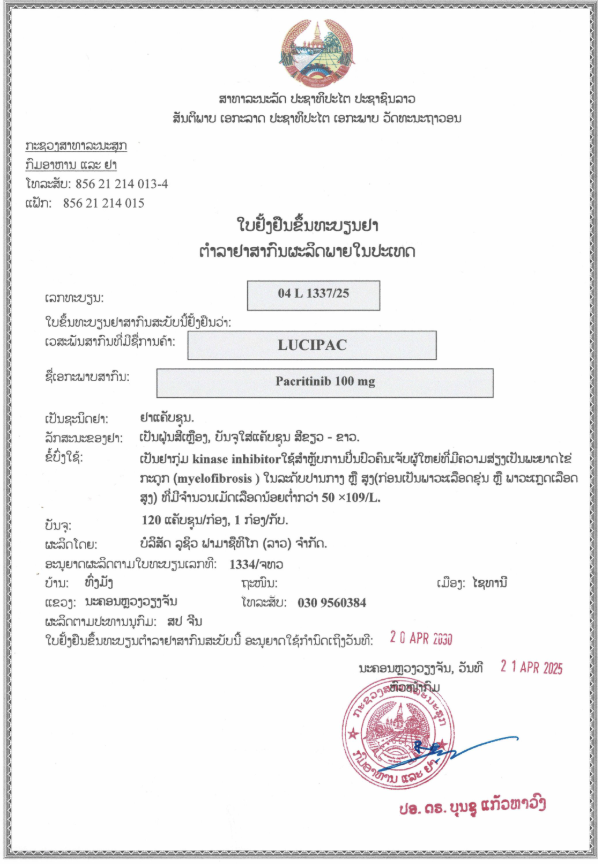
Drug Information Summary: Lucius Pacritinib Capsules
Disclaimer: This is a synthesized summary based on the known pharmacological profile of Pacritinib. This is not the official manufacturer's leaflet and does not replace professional medical advice.Pacritinib is a potent prescription drug with serious risks and must only be taken under the strict supervision of a hematologist or oncologist.
1. Brand and Generic Name
-
Generic Name: Pacritinib
-
Brand/Manufacturer: Lucius Pharmaceuticals (Laos) - Note: This is a generic/manufactured version. The original brand name is Vonjo®.
2. What is Pacritinib and what is it used for?
-
Pacritinib is a kinase inhibitor. It works by blocking specific enzymes (JAK2 and FLT3) involved in the signaling pathways that cause bone marrow to overproduce abnormal blood cells.
-
It is used for the treatment of adults with myelofibrosis (a type of bone marrow cancer) who have a low platelet count (thrombocytopenia), specifically below 50 x 10⁹/L.
3. Before you take Lucius Pacritinib
Do NOT take if you:
-
Are allergic to pacritinib or any of its ingredients.
Warnings and Precautions (Black Box Warning):
Pacritinib carries a BOXED WARNING for the following risks:
-
Major Hemorrhage (Bleeding): Can cause serious and fatal bleeding. Monitor patients for signs and symptoms of bleeding. Do not initiate in patients with active bleeding.
-
Cardiac Events: Can cause major adverse cardiac events (MACE: sudden cardiac death, heart attack, stroke, congestive heart failure). Consider the benefits and risks for patients with known cardiovascular risk factors.
Other Important Precautions:
Talk to your doctor about:
-
Low Platelets and Low Red Blood Cells (Anemia): Your blood counts will be monitored frequently. Pacritinib is used in patients who already have low platelets.
-
Gastrointestinal Toxicity: Diarrhea, nausea, and vomiting are very common. Your doctor may recommend medications to prevent and manage these symptoms.
-
Liver Function (Hepatotoxicity): Your doctor will perform blood tests to monitor your liver function before and during treatment.
-
Infections: May increase the risk of serious infections.
-
Pregnancy and Breastfeeding: Based on animal data, Pacritinib can cause fetal harm. Effective contraception is required during treatment and for at least 2 weeks after the last dose. Do not breastfeed during treatment and for at least 2 weeks after the last dose.
4. How to take Lucius Pacritinib
-
Dosage: The recommended dose is 200 mg orally, twice daily with or without food.
-
How to take: Swallow the capsules whole with water. Do not open, crush, or chew the capsules.
-
Timing: Take it at approximately the same times each day (e.g., morning and evening).
-
Dose Modifications: Your doctor will adjust the dose, interrupt treatment, or permanently stop it based on your response and any side effects you experience (especially related to bleeding, heart issues, or diarrhea).
5. Possible Side Effects
Common side effects may include:
-
Very Common:
-
Diarrhea (may be severe)
-
Nausea
-
Vomiting
-
Fatigue
-
Shortness of breath
-
Edema (swelling)
-
Constipation
-
Rash
-
Dizziness
-
Abdominal pain
-
-
Serious Side Effects (Contact your doctor immediately):
-
Signs of bleeding: unusual bruising, blood in stool or urine, coughing up blood, severe headache.
-
Signs of heart problems: chest pain, shortness of breath, rapid heartbeat, pain spreading to the jaw or shoulder.
-
Signs of infection: fever, chills.
-
Severe or persistent diarrhea, nausea, or vomiting leading to dehydration.
-
6. Drug Interactions
Inform your doctor about all medicines you are taking, especially:
-
Strong CYP3A4 Inhibitors (e.g., ketoconazole, clarithromycin): May increase Pacritinib levels and toxicity.
-
Strong CYP3A4 Inducers (e.g., rifampin, carbamazepine): May decrease Pacritinib levels and reduce effectiveness.
-
Medications that increase the risk of bleeding (e.g., anticoagulants like warfarin, antiplatelets like aspirin, NSAIDs like ibuprofen).
7. Storage
-
Store at or below 30°C (86°F).
-
Keep in the original container, tightly closed.
-
Protect from light and moisture.
-
Keep out of reach of children and pets.
8. Packaging
-
Typically supplied in a bottle.
Final Crucial Advice:
Pacritinib is used for a specific and serious blood disorder. Treatment requires extremely close monitoring for bleeding, heart issues, and gastrointestinal side effects. Frequent blood tests and open communication with your hematology team about any new or worsening symptoms are absolutely essential for safe and effective use. Always follow your doctor's specific instructions.
whatsapp:+852 61905607
wechat:yindu7689