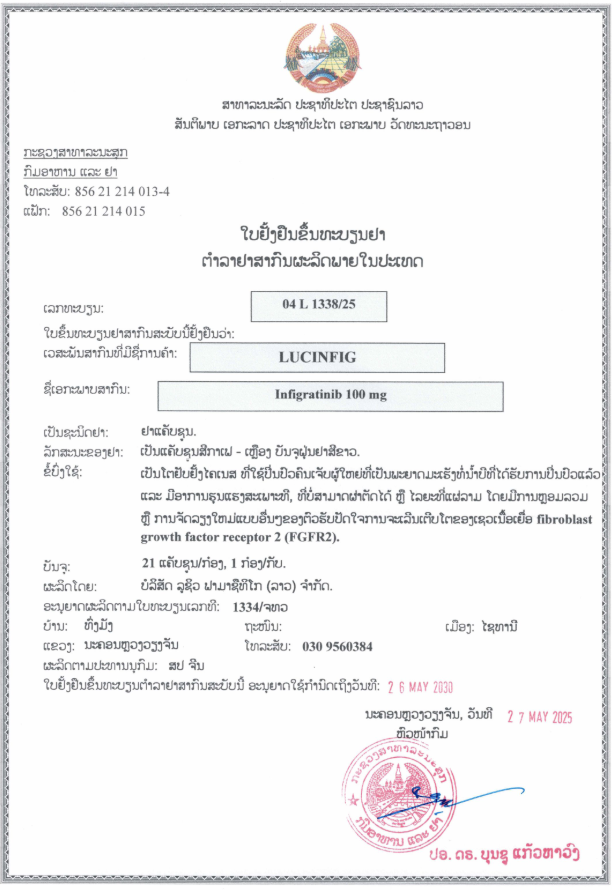
Drug Information Summary: Lucius Infigratinib Capsules
Disclaimer: This is a synthesized summary based on the known pharmacological profile of Infigratinib. This is not the official manufacturer's leaflet and does not replace professional medical advice.Infigratinib is a potent prescription drug with serious risks and must only be taken under the strict supervision of an oncologist.
1. Brand and Generic Name
-
Generic Name: Infigratinib
-
Brand/Manufacturer: Lucius Pharmaceuticals (Laos) - Note: This is a generic/manufactured version. The original brand name is Truseltiq® by BridgeBio.
2. What is Infigratinib and what is it used for?
-
Infigratinib is a kinase inhibitor. It works by blocking specific abnormal proteins (FGFR receptors) that promote cancer cell growth.
-
It is used to treat adults with previously treated, unresectable (cannot be removed by surgery), locally advanced or metastatic cholangiocarcinoma (bile duct cancer) that has a specific genetic marker: an FGFR2 (Fibroblast Growth Factor Receptor 2) fusion or rearrangement.
-
Important: A diagnostic test is required to confirm the presence of an FGFR2 alteration before starting treatment.
3. Before you take Lucius Infigratinib
Do NOT take if you:
-
Are allergic to infigratinib or any of its ingredients.
-
Have severe kidney or liver problems.
-
Have problems with the cornea (the clear outer layer of the eye) or have a history of retinal disorders.
Warnings and Precautions:
Talk to your doctor about:
-
Eye Problems (Ocular Toxicity): Infigratinib can cause serious eye problems, including retinal pigment epithelial detachment (RPED), which can lead to blurred vision. You must undergo a comprehensive eye examination before starting treatment and every month for the first 4 months, and every 3 months thereafter. Report any visual changes (blurriness, flashes, floaters) immediately.
-
Hyperphosphatemia (High Phosphate Levels): This is a very common side effect. Your doctor will monitor your phosphate levels regularly and may prescribe phosphate-lowering agents or adjust your dose if needed.
-
Nail Problems: May cause nail toxicity (e.g., separation of the nail from the bed, pain, discoloration).
-
Soft Tissue Calcification: High phosphate levels can lead to calcium deposits in soft tissues (e.g., skin, eyes, kidneys, blood vessels).
-
Dry Eyes: Use artificial tears as needed.
-
Liver Function (Hepatotoxicity): Your doctor will perform blood tests to monitor your liver function.
-
Pregnancy and Breastfeeding: Infigratinib can cause harm to an unborn baby. Effective contraception is required during treatment and for at least 1 month after the last dose. Do not breastfeed during treatment and for at least 1 month after the last dose.
4. How to take Lucius Infigratinib
-
Dosage: The recommended dose is 125 mg orally, once daily for 21 consecutive days, followed by 7 days off, to form a complete 28-day cycle.
-
How to take: Swallow the capsules whole with water. Do not open, crush, or chew the capsules.
-
Timing: Take on an empty stomach at least 1 hour before or 2 hours after food.
-
Missed Dose: If you vomit after taking a dose or miss a dose, do not take an extra dose. Take your next dose at the scheduled time.
5. Possible Side Effects
Common side effects may include:
-
Very Common:
-
Increased creatinine (kidney function test)
-
Increased phosphate levels (hyperphosphatemia)
-
Nail toxicity
-
Dry mouth
-
Dry skin
-
Fatigue
-
Hair loss
-
Diarrhea
-
Dry eyes
-
Decreased appetite
-
Altered taste
-
Nausea/vomiting
-
Constipation
-
Abdominal pain
-
Joint pain
-
-
Serious Side Effects (Contact your doctor immediately):
-
Vision changes (blurriness, flashes, floaters)
-
Severe eye pain or redness
-
Symptoms of high phosphate levels (muscle cramps, numbness, tingling)
-
Symptoms of liver problems (yellowing of skin/eyes, dark urine, severe nausea)
-
6. Drug Interactions
Inform your doctor about all medicines you are taking, especially:
-
Drugs that affect stomach acidity (e.g., proton pump inhibitors like omeprazole, H2 blockers like famotidine, antacids). These can significantly reduce the absorption of infigratinib. Your doctor will advise on the timing of these medications.
-
Other drugs that may also increase phosphate levels.
7. Storage
-
Store at or below 30°C (86°F).
-
Keep in the original container, tightly closed.
-
Protect from light and moisture.
-
Keep out of reach of children and pets.
8. Packaging
-
Typically supplied in a bottle with desiccant to keep moisture out.
Final Crucial Advice:
Treatment with Infigratinib requires strict adherence to the dosing schedule, dietary instructions (fasting), and a proactive schedule of monitoring (eye exams, blood tests). Close and continuous communication with your oncology team is essential for managing side effects and ensuring the safe and effective use of this medication. Always follow your oncologist's specific instructions.
whatsapp:+852 61905607
wechat:yindu7689